I remember the first time I tried to speed through a sausage and cabbage stir fry: the cabbage went limp and watery while the sausage stayed pale and uninspiring. After a few tweaks—higher heat, drier cabbage, and finishing the pan with a quick soy-ginger sauce—I landed on a version that hits the right texture and family-friendly flavor in about 30 minutes. The sausage and cabbage stir fry is fast, fills the house with a savory aroma, and works with grocery-store sausages when time is tight.
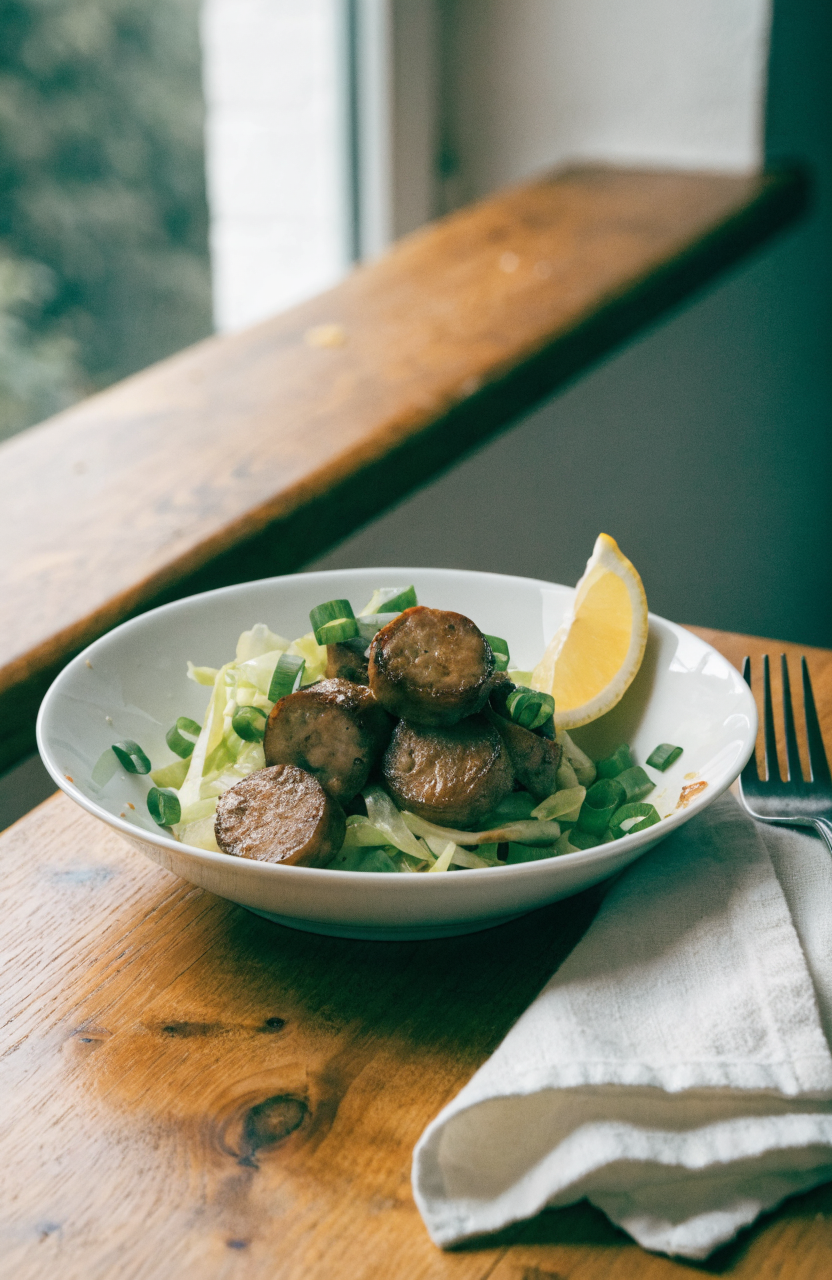
Why this sausage and cabbage stir fry works
The key technique is high-heat searing with brief, purposeful stirring so ingredients brown without releasing excess water. Cabbage is mostly water, and when cooked low and slow it becomes soft and watery; instead, I shred it thin, pat it dry, and introduce it after the sausage has browned. The sausage-to-cabbage ratio I use (about 1:2 by volume) gives you meaty bites in every forkful without drowning the pan in grease. During testing I learned that starting with slightly drier cabbage and a hot, roomy skillet produced crisp-tender cabbage while the sausage developed color and deeper flavor. A small finish of soy, ginger, and a splash of rice vinegar ties everything together and brightens the dish without adding steps.
Key takeaways
- High-heat sear the sausage first to develop browning and flavor.
- Shred and dry cabbage to avoid a watery stir fry; add it after browning the sausage.
- A quick soy-ginger pan sauce lifts the whole dish and keeps it family-friendly.
Ingredients you’ll need and what to substitute
For this sausage and cabbage stir fry I use smoked turkey sausage or mild chicken sausage to keep flavors familiar for kids while avoiding higher-fat options; use any fully cooked fresh sausage from the grocery case if you prefer. Green cabbage works well because it holds texture, but you can swap half the cabbage for shredded carrots or napa cabbage for a milder flavor. Low-sodium soy sauce controls salt—sub tamari for gluten-free households and use a touch more if you choose that swap. A small amount of cornstarch in the sauce (dissolved in water) gives a light gloss and helps the sauce cling without thickening into a gravy.
When ingredients matter: slice the sausage into 1/3-inch coins so each piece gets a good sear, and shred the cabbage thinly for quick, even cooking. If using pre-cooked sausage from a package, still sear it briefly to develop color and caramelization.
Equipment
You only need a few common items: a 12-inch skillet or large nonstick frying pan for even browning and space for stirring, a chef’s knife for shredding the cabbage, a large cutting board, a pair of tongs or spatula, and a small bowl for mixing the sauce. If you prefer, use a wok (14-inch) instead of a skillet; make sure it’s roomy so the cabbage can move freely and steam escapes. Small prep steps—like measuring the sauce and readying garnishes—save time during the hot, fast finish and reduce cleanup afterward.
How to make sausage and cabbage stir fry
Prepare the ingredients
Start by shredding about half of a medium green cabbage thinly and spread it in a single layer on paper towels for a few minutes; pat the top to remove surface moisture. Slice the sausage into 1/3-inch rounds and mince fresh garlic and ginger. Measure the sauce ingredients—soy sauce, rice vinegar, a touch of brown sugar, and a cornstarch slurry—and have them ready because the stir fry moves quickly once the pan is hot.
Brown the sausage and build flavor
Heat a 12-inch skillet over medium-high heat until very hot, then add 1 tablespoon neutral oil. Add the sausage slices in a single layer, leaving space between pieces to brown; don’t crowd the pan. Let the sausage sear, undisturbed, for 2–3 minutes until the undersides have a good caramel color, flip and brown the other side for another 2 minutes. Remove the browned sausage to a plate and drain any excess rendered fat if there’s more than 2 tablespoons—leave about 1 tablespoon in the pan to carry flavor.
Cook the aromatics and cabbage
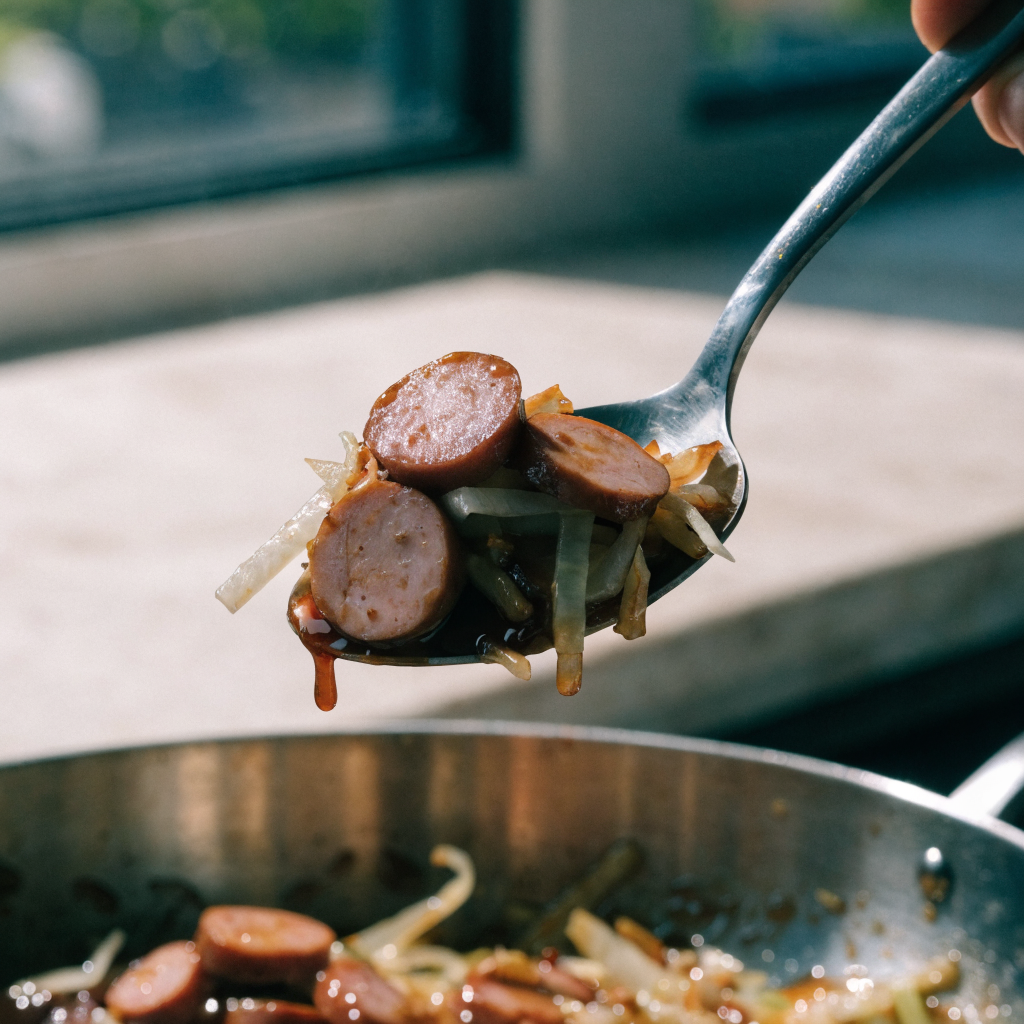
Reduce heat slightly to medium-high and add the remaining 1 tablespoon of oil if the pan looks dry. Add the minced garlic and ginger and stir for 20–30 seconds until fragrant. Toss in the shredded cabbage and stir-fry vigorously for 3–5 minutes: you want the cabbage to soften and develop a few browned edges but remain crisp-tender. Watch for steam; keeping the pan hot and stirring often helps evaporate moisture instead of pooling it.
Finish with sauce and combine
Return the sausage to the skillet, pour the soy-ginger sauce over the mixture, and stir continuously for 1–2 minutes until the sauce coats everything and thickens slightly. Taste and adjust with a pinch of salt or a splash more rice vinegar if it needs brightness. Remove from heat and finish with sliced green onions and a squeeze of fresh lemon or lime if you like a bright contrast.
Things I learned the hard way
- Avoid adding cabbage to a cool pan: I once added cabbage too early and it steamed down to nothing; the fix was higher heat and adding it later.
- Don’t crowd the pan with sausage: overcrowding led to pale sausage; working in a hot, roomy skillet solved browning problems.
- Pat the cabbage dry: leftover surface water turned the stir fry watery on my first try; blotting the cabbage made a big difference.
- Thinly slice the sausage: thicker pieces took longer to heat through and didn’t brown evenly; 1/3-inch coins cook quickly and brown nicely.
- Control rendered fat: if your sausage is greasy, drain excess but keep a tablespoon for flavor; too much fat made the dish heavy.
Variations to try
- Spicy version: add 1/2 teaspoon red pepper flakes or 1 tablespoon gochujang blended into the sauce; reduce brown sugar by half to balance heat.
- Vegetable-forward: replace half the cabbage with thinly sliced bell pepper and snap peas; cook peppers for 2–3 minutes with the cabbage to keep them crisp.
- Rice or noodle bowl: serve the stir fry over steamed rice or quickly tossed with cooked soba for a more filling meal; if mixing with noodles, add a splash of water and heat briefly so the sauce coats evenly.
- Herbed finish: stir in a handful of chopped cilantro at the end for a fresher profile; omit if serving to picky eaters who prefer milder flavors.
Storage, freezing, and reheating
Refrigerate leftovers in an airtight container for up to 3 days. To reheat, warm gently in a skillet over medium heat with a tablespoon of water or broth to loosen the sauce, or microwave in 30-second increments until hot. Freezing isn’t recommended because cabbage becomes mushy after thawing; if you must freeze, keep in a shallow airtight container for up to 1 month and expect softer texture when reheated. For make-ahead, cook the sausage and sauce separately and combine with freshly stir-fried cabbage just before serving to preserve texture.
What to serve with sausage and cabbage stir fry
This stir fry pairs well with plain steamed rice, quick fried rice for a heartier plate, or simple buttered egg noodles. A light side salad or quick cucumber salad with rice vinegar complements the savory sausage. For a family dinner, add steamed edamame or roasted sweet potatoes on the side to round out nutrition and color.
30-Minute Sausage and Cabbage Stir Fry
Ingredients
Equipment
Method
- Slice the sausage into 1/3-inch rounds and shred the cabbage thinly; spread the cabbage on paper towels and pat dry to remove surface moisture.
- Mix soy sauce, rice vinegar, brown sugar, sesame oil, and cornstarch slurry in a small bowl and set aside.
- Heat a 12-inch skillet over medium-high heat until very hot, add 1 tablespoon oil, and arrange sausage slices in a single layer; sear undisturbed 2–3 minutes until browned, flip and brown the other side 1–2 minutes, then remove to a plate and drain excess fat leaving about 1 tablespoon in the pan.
- Add remaining tablespoon oil to the hot skillet, add sliced onion and cook 2 minutes until translucent, add garlic and ginger and stir 30 seconds until fragrant, then add shredded cabbage and stir-fry 3–5 minutes until crisp-tender with a few browned edges.
- Return the sausage to the skillet, pour the soy-ginger sauce over everything, and stir continuously 1–2 minutes until the sauce thickens and coats the ingredients; taste and adjust seasoning with salt or a splash more vinegar if needed.
- Remove from heat, garnish with green onions and an optional squeeze of lemon or lime, and serve immediately over rice or noodles if desired.
Notes
Frequently asked questions
Can I use raw sausage in this stir fry? Yes—use raw fresh sausage links cut into rounds and be sure to cook them through to 165°F internal temperature; sear first and finish in the pan with the cabbage so flavors combine.
Can I use pre-shredded cabbage? You can, but blot it with paper towels to remove excess moisture so the stir fry doesn’t become watery.
Is this recipe freezer-friendly? Not ideal—cabbage releases a lot of water when frozen and thawed, so texture will be softer; freeze only if necessary and expect a softer result.
How do I make it gluten-free? Substitute tamari or a certified gluten-free soy sauce and confirm the sausage contains no gluten fillers.
Can I double the recipe? You can double it, but split into two pans or cook in two batches to avoid crowding and steaming instead of searing.
What if my stir fry is too salty? Add a squeeze of lemon or a teaspoon of sugar to balance, or mix in plain cooked rice to dilute saltiness.
Closing
The sausage and cabbage stir fry hits the sweet spot for busy weeknights: it’s quick, fills the family up, and stands up to a few smart tweaks that keep textures bright and flavors balanced—plus, cleanup is easy. I usually make a double batch of sauce so I can finish the skillet in minutes the next time I want a fast dinner. Little practices like blotting the cabbage and prepping the sauce ahead make repeatable results easy and help the finished dish hold its texture and flavor for seconds and leftovers.

Leave a Reply