This peach sorbet is built for warm afternoons and busy families: a short maceration step pulls juicy flavor from ripe fruit, a warm simple syrup ensures sugar dissolves completely, and a quick chill before churning yields a smooth, scoopable finish. Bright lemon and a pinch of salt keep the fruit profile lively while still being easy enough for home cooks to make any time peaches are in season. The method below keeps timing clear so you can plan the maceration, chill, and freezing steps around other tasks.
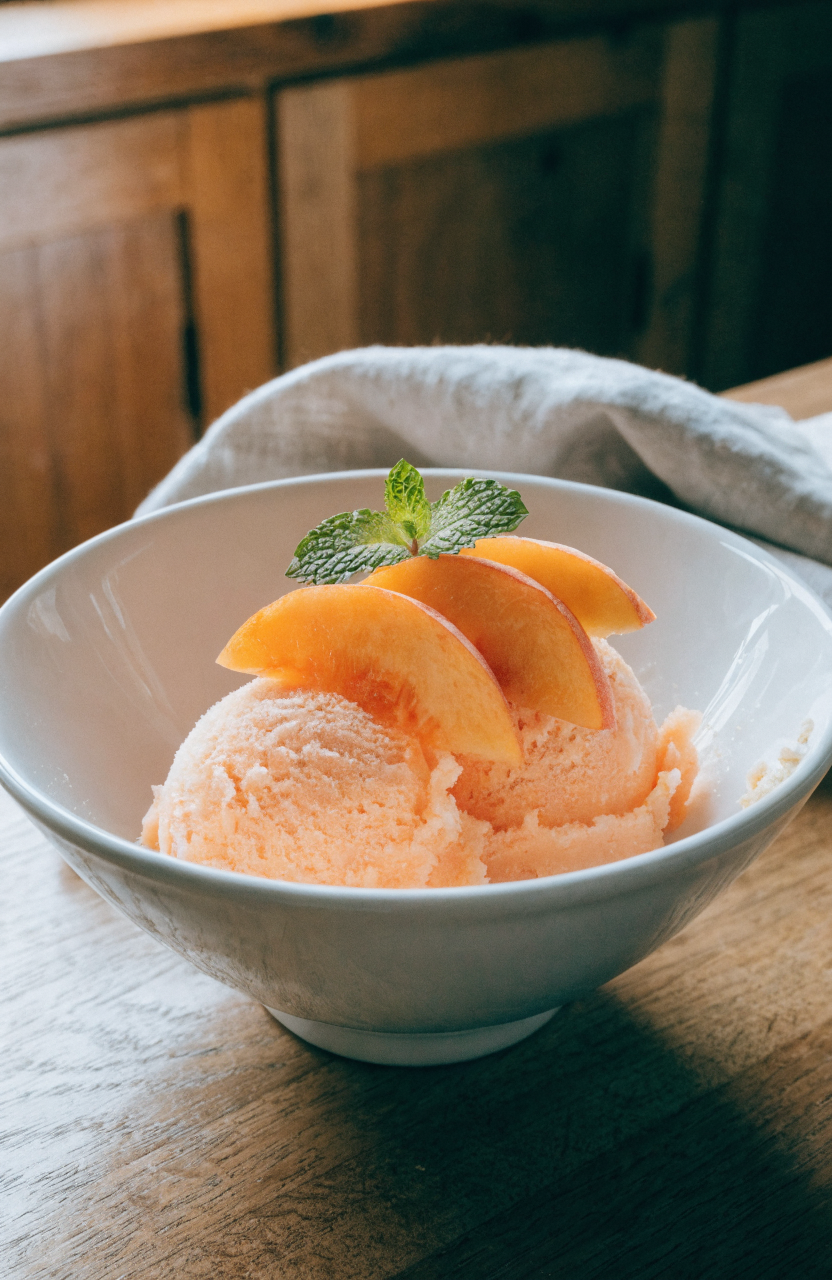
Why this peach sorbet works
The key technique that makes this peach sorbet reliable is twofold: macerating the peaches briefly with a measured portion of the sweetener and lemon to draw out juice and concentrate flavor, then turning that macerated fruit into a simple syrup–based purée so the final churned frozen dessert freezes smoothly. Early trials that blended raw peaches directly with cold water and sugar produced icy crystals and a muted fruit taste. Adding a short warm syrup step dissolves sugar fully and a light heat-blend helps break down peach fibers without cooking away the fresh aroma. That produced a silkier mouthfeel and stronger fruit notes. This method fits clear food-safety guidance by using safe cooling, realistic time expectations, and refrigeration steps that reduce the chance of uneven freezing.
Key takeaways
- Short maceration intensifies peach flavor and reduces icy texture.
- A hot simple syrup ensures sugar is fully dissolved for smoother freezing.
- Lemon juice brightens flavor and a pinch of salt rounds the profile so the fruit stands out.
Ingredients you’ll need and what to substitute
For a clean peach-forward result, ripe but firm peaches are best because they hold flavor without becoming mealy when puréed. The recipe uses a classic simple syrup (sugar and water) to control freezing point and texture; if you prefer a sugar-free option, erythritol or another granular sugar substitute designed for freezing can replace the sugar measured cup-for-cup but may change mouthfeel slightly. A small pinch of fine salt rounds the flavor; it’s easy to miss but noticeable when omitted.
Substitutions and notes:
- If peaches are out of season, thawed frozen peach slices work well—measure by weight and reduce maceration time because frozen peaches release more liquid once thawed.
- For a slightly softer, scoopable texture straight from the freezer, add 1 tablespoon of light corn syrup or 1 tablespoon of neutral honey (not for strict vegan needs); these interfere with crystal formation. Omitting it keeps the recipe fully simple and family-friendly.
- Use fresh lemon juice (not bottled) for best brightness; bottled juice works in a pinch but tastes less fresh.
Equipment
You’ll need these basic items:
- 1-quart ice cream maker (hand-crank or electric) or a frozen-safe loaf pan if you don’t own a churn
- Blender or food processor for puréeing peaches (I used a 7-cup blender)
- Small saucepan for simple syrup
- Fine-mesh sieve or chinois (optional, for extra smooth texture)
How to make peach sorbet
Prepare the peaches
Peel and slice about 2 pounds of ripe peaches. Blanching for 30–45 seconds and transferring to an ice bath helps slip the skins if you dislike the texture; otherwise, peel with a paring knife. Toss the sliced peaches with 2 tablespoons of granulated sugar (from the recipe total) and 1 tablespoon of lemon juice and let sit for 15–20 minutes at room temperature. This maceration draws out juice and concentrates the peach aroma so the finished dessert tastes fresher and needs less added liquid.
Make the syrup and purée
While the peaches macerate, make a simple syrup by combining 1 cup granulated sugar and 1 cup water in a small saucepan. Heat over medium just until the sugar dissolves and the mixture is clear, about 3–4 minutes; avoid boiling vigorously. Remove from heat and let cool for 5 minutes. Add the warm syrup to the peaches and pulse in a blender until completely smooth—about 30–45 seconds depending on blender power. If you want an ultra-smooth texture, press the purée through a fine-mesh sieve into a bowl; discard solids. If using the sugar-free option, dissolve 1 cup erythritol in 1 cup warm water instead of the granulated sugar and proceed as above.
Chill and churn
Chill the purée in the refrigerator until thoroughly cold, about 45–60 minutes. Cold base churns more quickly and yields finer ice crystals. If using an ice cream maker, follow the manufacturer’s directions—a 1-quart electric maker typically takes about 20–25 minutes to reach soft-sorbet consistency. The mixture will look slightly glossy and hold soft peaks when the churn is done.
Firm up and store
Transfer the churned sorbet to a shallow, freezer-safe container and press a layer of parchment directly on the surface to prevent ice formation. Freeze at least 2 hours to firm up. When ready to serve, let the container sit at room temperature for 5–7 minutes so scoops come out cleanly. The finished frozen treat tastes bright, smells of fresh peaches with a hint of citrus, and has a smooth, lightly icy texture that’s easy for kids to scoop.
Things I learned the hard way
- If the peaches are under-ripe, the sorbet tastes starchy—use ripe peaches that yield slightly to gentle pressure but aren’t too soft.
- Skipping the hot syrup step left grainy sugar crystals in early batches; dissolve sugar fully in warm water for a smooth freeze.
- Churning a warm purée gave large ice crystals—always chill the base completely before churning.
- Don’t blend whole peaches including the pits; remove pits and any bitter pit-near flesh.
- Doubling the recipe will require churning in two batches unless you have a larger-capacity ice cream maker; overcrowding prevents proper freezing.
- For a no-churn loaf-pan method, freeze the purée in a shallow pan and stir thoroughly every 30 minutes for the first 2 hours to break up crystals; it works, but texture won’t be as smooth as churned sorbet.
Variations to try
- Peach-Basil Sorbet: Add 2 tablespoons lightly packed chopped fresh basil to the maceration step, strain before churning; no timing changes required but flavor will be herb-forward.
- Peach-Lime Sorbet: Swap lemon juice for 1 tablespoon lime juice and add 1 teaspoon lime zest for a zesty twist; lime brightens differently and pairs well with grilled fruit desserts.
- Frozen-Peach Shortcut: Use 1.5 pounds frozen peach slices thawed and drained—reduce maceration to 5 minutes because frozen fruit releases a lot of liquid.
- Sugar-Free Option: Replace granulated sugar with 1 cup granular erythritol, dissolve fully in warm water; expect a slightly less rounded sweetness and possibly faster freezing.
Storage, freezing, and reheating
Refrigerator storage is not applicable for finished sorbet; store in the freezer for up to 1 month for best texture. Use an airtight, freezer-safe container and press parchment directly on the surface to minimize ice crystals. If the sorbet becomes very hard in the freezer, let it sit at room temperature for 7–10 minutes before scooping. Avoid multiple refreeze–thaw cycles as texture degrades. For longer storage, portion sorbet into small airtight containers and press a layer of plastic wrap before sealing; this helps keep it fresher for about 6 weeks, though texture will slowly decline.
What to serve with this frozen dessert
The sorbet pairs well with light desserts and summer mains. Try serving with shortbread cookies for crunch, a scoop alongside grilled pound cake, stirred into sparkling water as a quick float, or served after a grilled chicken dinner to refresh the palate. These pairings work well for family gatherings and casual suppers where a light, fruity finish is welcome.
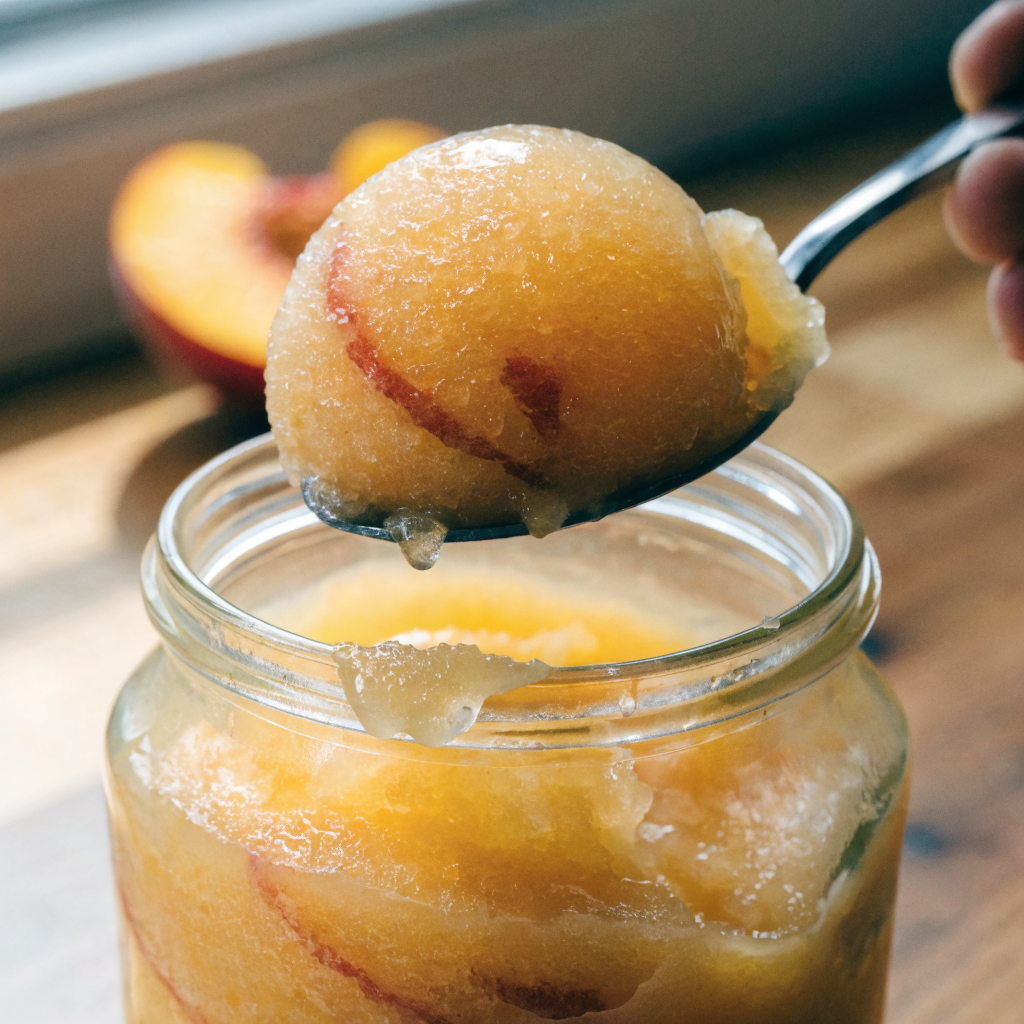

Simple Peach Sorbet
Ingredients
Equipment
Method
- Peel, pit, and slice the peaches. Toss the slices with 2 tablespoons of the granulated sugar and 2 tablespoons lemon juice, then let macerate at room temperature for 15–20 minutes.
- Combine 1 cup granulated sugar and 1 cup water in a small saucepan. Heat over medium, stirring until sugar dissolves and the mixture is clear (about 3–4 minutes). Remove from heat and cool 5 minutes.
- Add the warm syrup to the macerated peaches and blend until smooth, about 30–45 seconds. For an ultra-smooth sorbet, press the purée through a fine-mesh sieve into a bowl and discard solids.
- If using the sugar-free option, dissolve 1 cup erythritol in 1 cup warm water instead of the granulated sugar syrup and proceed as above.
- Chill the peach purée in the refrigerator until completely cold, about 45–60 minutes. Freeze in your ice cream maker according to the manufacturer’s instructions until it reaches soft-sorbet consistency, about 20–25 minutes.
- Transfer the churned sorbet to a shallow, freezer-safe container, press a piece of parchment directly on the surface to prevent ice crystals, and freeze at least 2 hours to firm up. Let sit at room temperature 5–7 minutes before scooping.
Notes
Frequently asked questions
Can I make this without an ice cream maker? Yes. Pour the chilled purée into a shallow, freezer-safe pan, freeze, and stir vigorously every 30 minutes for the first 2 hours to break crystals; texture will be slightly icier but still pleasing.
How long does homemade sorbet last in the freezer? Properly stored in an airtight container with the surface covered, expect best quality for about 3–4 weeks; it’s safe longer but texture and flavor fade.
Can I use canned peaches? You can, but canned peaches are sweeter and softer, so reduce added sugar and skip maceration; drain well and taste before adjusting sweetness.
Why is my sorbet grainy? Graininess usually comes from undissolved sugar or churning a warm base; dissolve sugar in warm water and chill the mixture thoroughly before churning.
Can I freeze immediately after churning? Yes—transfer to a shallow container, press parchment on top, and freeze for at least 2 hours to set completely before serving.
Closing
This peach sorbet brings bright summer peaches into an easy, family-friendly frozen dessert that holds up in the freezer and scoops cleanly. When peaches are ripe, try this method and you’ll notice how much brighter the fruit tastes with just a little technique; a quick maceration, a warm syrup to dissolve sugar, and a full chill before churning are the simple steps that make the difference for smooth, scoopable results.
As a final practical note, portioning into small containers helps prevent repeated thawing of large batches and keeps texture consistent. Whether you serve it alone, with cookies, or as a palate-cleansing finish to a meal, this approach yields reliably bright, refreshing results.

Leave a Reply