I remember the first time I tried a potsticker soup, thinking I could toss frozen dumplings into broth and call it dinner — the dumplings went mushy and the broth tasted one-note. This potsticker soup fixes that; the potsticker soup uses a quick, flavorful homemade broth, a gentle steaming step to keep dumplings tender, and last-minute crisp vegetables so every spoonful has texture and flavor.
For busy families, this recipe fits into a short dinner window without relying on processed soups, and it’s easy to customize for picky kids or whatever vegetables are on hand.
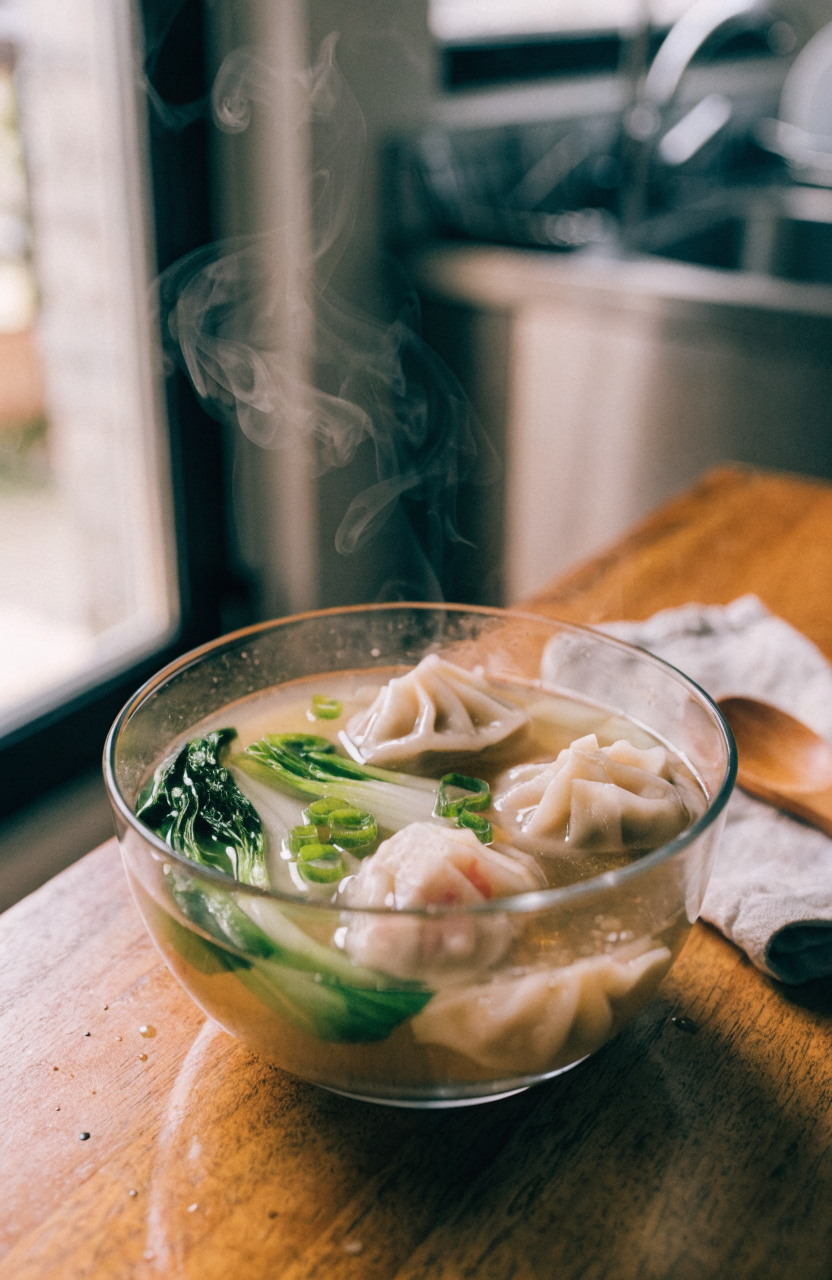
Why this potsticker soup works
The key technique is controlling moisture so the potstickers cook through without turning soggy. I combine a savory chicken-ginger broth with a brief simmer, then add frozen or fresh potstickers in two stages: a short simmer to heat through, followed by a gentle steam covered for 3–4 minutes so the dumpling wrappers finish cooking without soaking. The broth ratio — about 4 cups of stock per 12–16 potstickers — keeps the soup flavorful without drowning the dumplings. I also add quick-cooking vegetables at the end to preserve crunch and color.
During testing I fixed two common issues: a bland broth and overcooked dumplings. Adding both low-sodium soy sauce and a splash of rice vinegar rounded the flavor, while the covered steam step after simmering prevented the potstickers from falling apart. The final recipe is reliable across fresh or frozen dumplings and suits a family dinner routine.
Key takeaways
- Simmer then steam: brief covered steaming prevents soggy potstickers.
- Layer flavors: ginger, garlic, soy, and a splash of rice vinegar brighten the broth.
- Add crunchy veggies last so they stay crisp and colorful.
Ingredients you’ll need and what to substitute
The backbone is a clear chicken broth; I use low-sodium chicken broth so you control salt, but a good-quality vegetable broth works for a meatless version. Fresh ginger and garlic are simple flavor builders — grated ginger releases more aroma than dried. Potstickers may be fresh or frozen; if frozen, add a couple of extra minutes to the steam step. For vegetables I like baby bok choy, sliced carrots, and scallions for color and texture, though baby spinach or napa cabbage are fine swaps. Use low-sodium soy sauce to avoid over-salting and balance with rice vinegar or a squeeze of lime if you prefer acidity.
Budget-friendly swaps: use store-brand broth and frozen mixed vegetables (add at the end and reduce steam by a minute). For a vegetarian version, replace chicken broth with vegetable broth and use vegetable-filled dumplings.
Equipment
You don’t need anything fancy — a 4- to 6-quart Dutch oven or stockpot works best to maintain even heat, and a tight-fitting lid helps the brief steam finish. A small grater or microplane for ginger and a ladle for serving are helpful. If you use fresh dumplings, a large skillet for pan-searing before adding to the soup is an optional step for extra texture.
How to make potsticker soup
Prep and build the broth
Start by heating 1 tablespoon of neutral oil in a 4- to 6-quart pot over medium heat. Add the grated 1 tablespoon ginger and 2 minced garlic cloves and cook until fragrant, about 30 seconds — don’t let them brown. Pour in 4 cups low-sodium chicken broth, 1 cup water, 2 tablespoons low-sodium soy sauce, and 1 teaspoon sesame oil, then bring to a gentle simmer over medium-high heat. Taste and add up to 1/2 teaspoon fine sea salt if needed. Simmer uncovered for 5 minutes to let the aromatics infuse.
Cook potstickers without sogginess
If using frozen potstickers, do not thaw them first. Add 12–16 potstickers in a single layer if possible. Lower the heat to maintain a gentle simmer and cook uncovered for 3 minutes to let the wrappers start to hydrate. After 3 minutes, cover the pot and reduce heat to the lowest setting and let steam for 3–4 minutes for fresh potstickers or 4–5 minutes for frozen ones. This two-step method cooks the filling while finishing the wrapper without over-saturating it.
Add vegetables and finish
Uncover and add quick-cooking vegetables: 2 cups halved baby bok choy or 4 cups chopped baby spinach, plus 1 medium carrot thinly sliced on the bias for color. Return to a very gentle simmer for 1–2 minutes until vegetables are just tender-crisp. Finish with 1 tablespoon rice vinegar, 1 teaspoon white sugar or honey (optional, to balance), and 2 chopped scallions. Adjust seasoning with more soy sauce or a pinch of salt. Serve hot with a drizzle of chili oil for those who want heat.
Things I learned the hard way
- Don’t drop potstickers into a rolling boil — vigorous boiling makes wrappers tear. Gentle simmer then steam gives the best texture.
- If your broth tastes flat, it usually needs acid. A splash of rice vinegar or lime brightens flavors immediately.
- Adding vegetables too early yields limp, grey greens. Add them in the last 1–2 minutes.
- If you pan-sear fresh potstickers first, reduce simmer time by 1–2 minutes because they’ve started cooking already.
- My first attempt used too little broth and ended up thick; keep the broth-to-potsticker ratio around 4 cups per 12–16 potstickers for a balanced bowl.
- I once salted the broth with regular soy sauce, which made it too salty; low-sodium soy gives room for adjustments.
Variations to try
- Spicy Sesame: Stir 1 tablespoon tahini into the finished broth and add 1 teaspoon chili paste; skip the sesame oil if you prefer a cleaner heat.
- Ginger-Scallion Veggie: Use vegetable broth and vegetable dumplings, add extra scallions and a splash of mushroom soy for an umami boost; cook the dumplings the same way.
- Pan-Seared Potsticker Bowl: Pan-sear fresh potstickers in a skillet for 2 minutes per side until golden, then add to the simmering broth for 1–2 minutes to finish.
- Hearty Noodle Upgrade: Add 4 ounces of dried egg noodles at the start of simmering and reduce broth to 3 cups if you want a noodle-forward bowl (cook to package doneness).
Storage, freezing, and reheating
Refrigerator: Store leftovers in airtight containers for up to 3 days; dumplings absorb broth over time, so keep broth and potstickers together only if you expect to eat them within 24 hours. For longer fridge storage, separate dumplings and broth: place drained potstickers in one container and broth with vegetables in another.
Freezing: I don’t recommend freezing assembled soup — dumpling wrappers become gummy. You can freeze extra cooked potstickers separately on a sheet tray until solid, then transfer to a freezer bag for up to 2 months. Thaw in the refrigerator before finishing in hot broth.
Reheating: Gently reheat broth on the stove until simmering, then add cold or refrigerated potstickers and steam covered for 3–4 minutes to warm through. Microwave reheating is possible but can over-soften wrappers; use short intervals and stir between bursts.
What to serve with potsticker soup
Pair this soup with simple sides that families like: a platter of quick cucumber pickles for crunch, steamed jasmine rice for heartier appetites, or an easy scallion pancake to scoop up broth. For a kid-friendly side, serve with lightly sautéed sugar snap peas or steamed edamame sprinkled with sea salt.
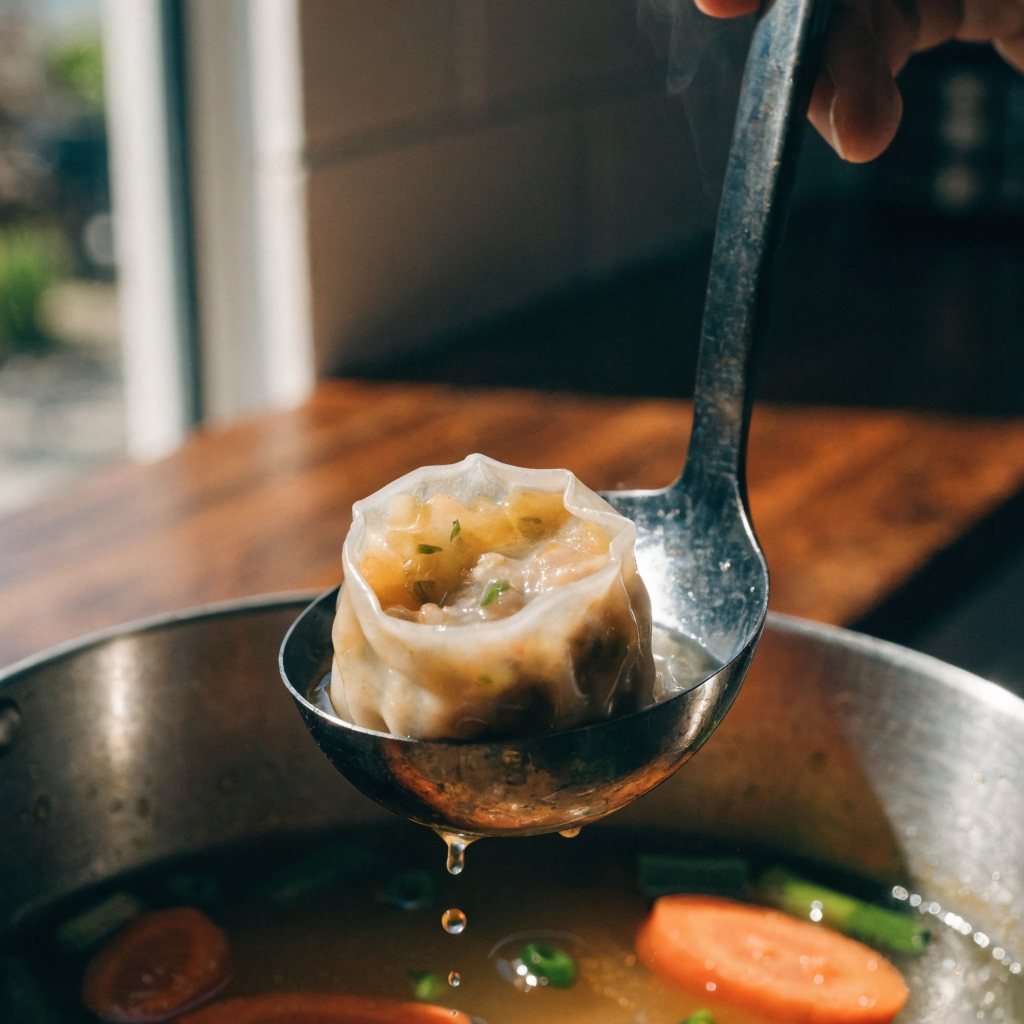
Simple Potsticker Soup
Ingredients
Equipment
Method
- Heat oil in a 4- to 6-quart pot over medium heat; add grated ginger and minced garlic and cook until fragrant, about 30 seconds, without browning.
- Add 4 cups low-sodium chicken broth, 1 cup water, 2 tablespoons low-sodium soy sauce, and 1 teaspoon sesame oil and bring to a gentle simmer; simmer uncovered 5 minutes.
- Add 12–16 potstickers in a single layer if possible and simmer gently, uncovered, for 3 minutes so wrappers begin to hydrate; then cover and reduce heat to the lowest setting and steam for 3–4 minutes for fresh or 4–5 minutes for frozen potstickers.
- Uncover and add baby bok choy (or spinach) and sliced carrot; simmer 1–2 minutes until vegetables are bright and just tender-crisp.
- Stir in 1 tablespoon rice vinegar, 1 teaspoon sugar or honey (optional), and chopped scallions; taste and adjust salt with more soy sauce if needed.
- Ladle into bowls and finish with chili oil if desired.
Notes
Frequently asked questions
Can I use frozen potstickers in potsticker soup? Yes. Add them frozen and use the longer steam time (about 4–5 minutes covered) so they cook through without tearing. Do not thaw first — thawed wrappers are more fragile.
How do I stop potstickers from becoming mushy? Cook them in a gentle simmer and finish covered to steam for a short period; avoid a hard boil and don’t leave them soaking for long periods before serving.
Can I make the broth ahead of time? Absolutely. The broth stores well in the refrigerator for 3-4 days; reheat it before adding potstickers and vegetables so everything finishes quickly and textures stay right.
Is it safe to add raw meat potstickers? Yes, as long as you follow the cook times and ensure the internal temperature reaches a safe level. Fillings that include poultry or other raw meats should reach at least 165°F when measured in the center. If you use raw meat dumplings, add a minute or two to the covered steam time and check an internal dumpling temperature when unsure.
Can I double this recipe? Yes. Use a larger pot (8-quart) to avoid crowding; maintain the broth-to-potsticker ratio and cook in batches if necessary so dumplings have room to cook evenly.
Closing
Potsticker soup delivers a satisfying weeknight bowl when you control the broth flavor and protect dumpling texture; the potsticker soup method here keeps dumplings tender and vegetables bright, and it fits neatly into a family dinner routine with dependable timing. For best results, taste the broth before adding salt, add vegetables at the end, and serve immediately so the contrast between the warm broth and the slightly firm dumpling wrappers remains enjoyable. Leftover components can be stored separately to preserve texture, and a final squeeze of fresh lime or extra scallions at the table refresh the flavors right before eating.
Extra note: If you plan to prepare parts ahead, set the aromatics and broth up to a day before, and keep dumplings chilled and covered until you’re ready to finish the bowl. This small bit of prep makes the final 20–30 minutes of cooking smooth and stress-free for weeknight dinners.

Leave a Reply