Turning stuffed peppers into a soup often results in rice swelling and a gluey broth; this version reworks the rice amount and simmer time to avoid that problem. This stuffed peppers soup keeps the bright tomato-and-pepper flavor while preventing mushy rice and a thin broth, which is why it uses a specific rice-to-liquid ratio and a two-stage simmer. If you want a dependable family dinner that reheats well and gives clear cues for doneness, this is the recipe to rely on for busy weeknights.
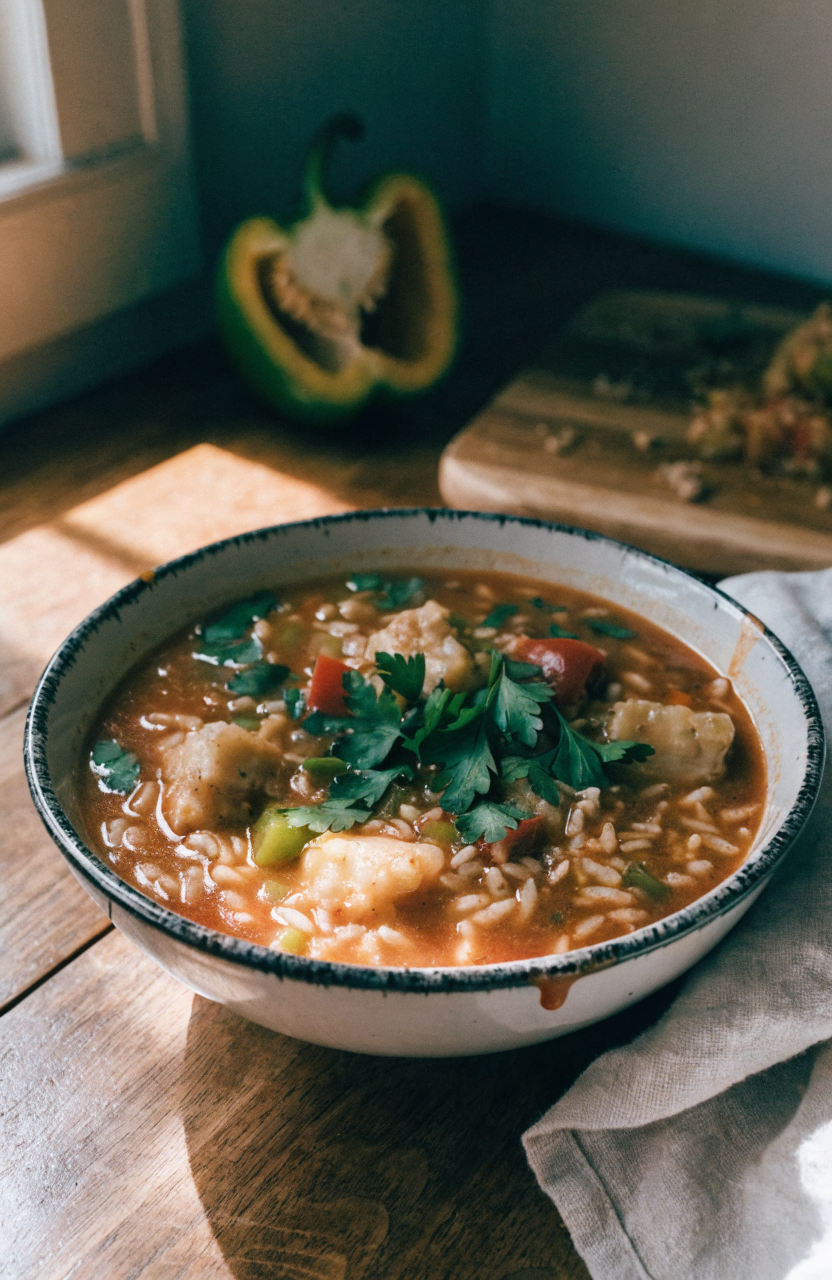
Why this stuffed peppers soup works
The key technique is controlling rice absorption and layering flavors. I use long-grain white rice added late in the cook so it finishes tender without soaking the pot dry, and I brown the ground beef first to capture savory fond that deepens the broth. A 1:3 rice-to-liquid ratio in the pot and a 12–15 minute simmer after adding rice gave me consistent results across tests. What changed after testing was the timing when the peppers go in: adding most of the peppers with the broth preserves their texture while finishing a small portion earlier develops a subtle roasted note. These adjustments fix the two common problems home cooks report—mushy rice and bland broth—while keeping hands-on time reasonable for busy families.
Key takeaways
- Brown the meat to build flavor and avoid watery broth.
- Add rice late and use a 1:3 rice-to-liquid ratio for reliable texture.
- Stagger peppers: some early for caramelized flavor, most later to stay bright.
Ingredients you’ll need and what to substitute
This recipe uses basic pantry items plus fresh vegetables: ground beef, long-grain white rice, onion, green bell pepper, red bell pepper, garlic, crushed tomatoes, and beef broth. I recommend 85/15 ground beef for flavor with manageable fat; if you prefer leaner meat, use 93/7 but drain any excess liquid after browning to prevent a greasy soup. Long-grain white rice gives the most predictable texture; short-grain or brown rice will need timing adjustments—brown rice takes significantly longer and absorbs more liquid, so increase broth by 25% and simmer 35–45 minutes after adding it. Canned crushed tomatoes and low-sodium beef broth keep the recipe convenient; use homemade broth for more depth. If you want a lighter version, substitute ground turkey in the same amount, but add a teaspoon of Worcestershire-style seasoning substitute (soy sauce or mushroom powder) to make up savory depth.
Equipment
Essential equipment includes a 6-quart Dutch oven or heavy-bottomed soup pot (important for even browning and heat control) and a wooden spoon or sturdy spatula for stirring. A fine-mesh sieve is handy if you rinse rice; a measuring cup and digital kitchen timer keep the rice timing consistent. If you don’t have a Dutch oven, a large heavy saucepan with similar capacity works—avoid a thin pot that can scorch the bottom while browning meat.
How to make stuffed peppers soup
Prep and brown the meat (15 minutes)
Start by warming the Dutch oven over medium-high heat. Add 1 tablespoon of oil, then 1 pound of ground beef, breaking it up into small pieces. Let it sit without stirring for 2–3 minutes so it can brown, then stir and continue browning until no longer pink, about 6–8 minutes total. Season with 1 teaspoon kosher salt and 1/2 teaspoon black pepper while browning. Scoop the beef onto a plate and leave any browned bits (fond) in the pot—those bits are flavor for the broth.
Build the soup base (10 minutes)
Reduce heat to medium, add 1 tablespoon of oil if the pot is dry, then cook 1 medium diced onion and 1 cup diced carrot for about 5 minutes until softened. Add 3 cloves minced garlic and 1/2 teaspoon dried oregano and cook 30 seconds until aromatic. Stir in 1 tablespoon tomato paste and cook 1 minute to caramelize the paste slightly. Pour in one 28-ounce can crushed tomatoes and 5 cups low-sodium beef broth, scraping up the fond with your spoon. Return the browned beef to the pot.
Add peppers and simmer (10 minutes)
Stir in 1 large green bell pepper and 1 large red bell pepper, both diced; reserve about 1/2 cup of diced red pepper to add later for freshness. Bring the soup to a simmer, then lower the heat and simmer gently for 10 minutes to let flavors marry. Taste and adjust seasoning—add an extra 1/2 teaspoon salt if your broth is very low in sodium.
Finish with rice and adjust texture (12–15 minutes)
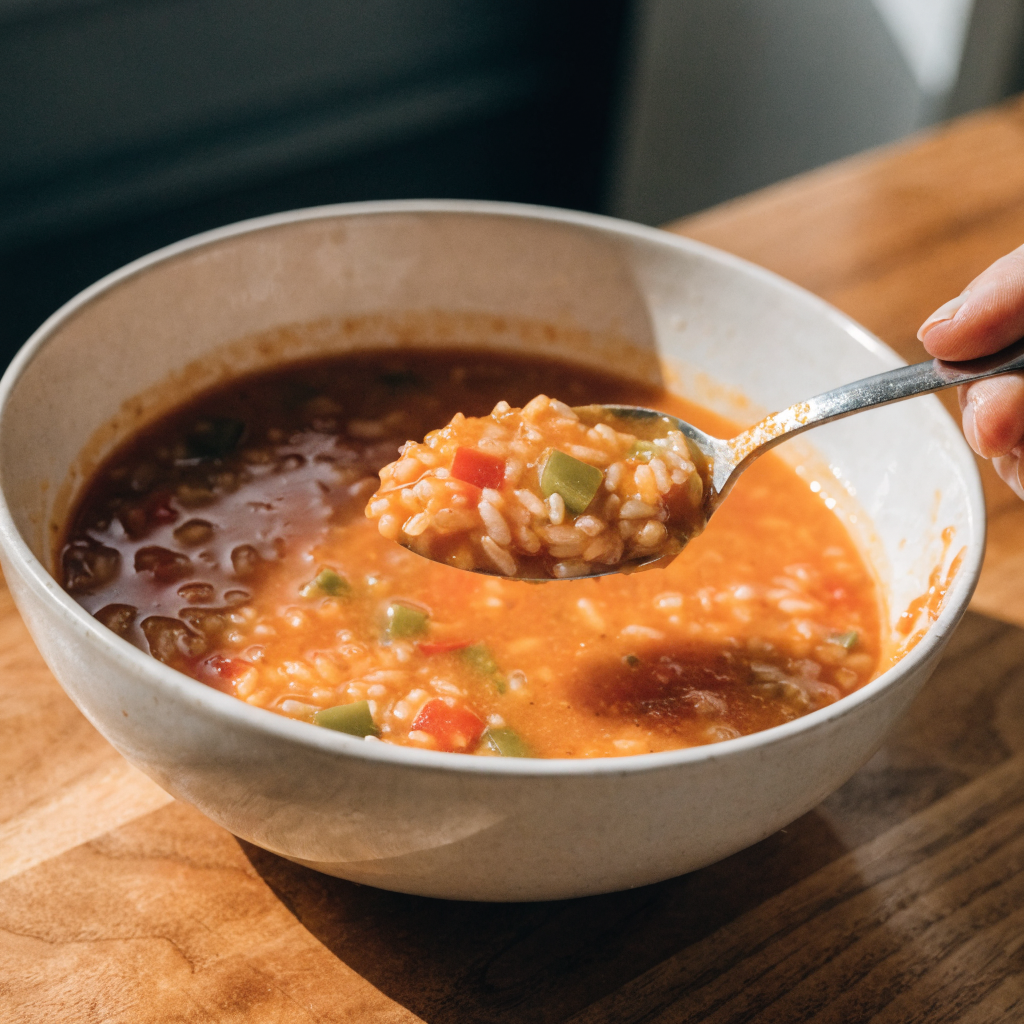
Measure and rinse 3/4 cup long-grain white rice under cold water until the water runs mostly clear. Stir the rice into the simmering soup, cover, and maintain a gentle simmer for 12–15 minutes. After 12 minutes, check a grain for doneness: it should be tender but still separate. If rice needs a minute or two more, give it that time, keeping the lid slightly ajar to prevent over-thickening. If the soup becomes too thick, stir in up to 1/2 cup additional hot broth or water to reach your preferred consistency. Stir in the reserved 1/2 cup diced red pepper and 2 tablespoons chopped fresh parsley just before serving for brightness.
Things I learned the hard way
- Too much rice too early makes a paste: I reduced the rice amount and added it late for a clear broth with tender grains.
- Skipping browning sacrifices depth: searing the beef and leaving the fond made a noticeably richer soup.
- Using brown rice needs a plan: brown rice swelled the pot on my first try, so I now recommend either par-cooking it separately or increasing broth and time.
- Over-salting with commercial broth: start with low-sodium broth and adjust at the end.
- Bell peppers lose snap if cooked too long: I reserve a small portion to add at the end for texture contrast.
Variations to try
1) Rice-free version: Replace rice with 8 ounces of small ditalini or orzo pasta, adding it in the last 8–10 minutes of simmering; reduce initial broth by 1/2 cup to maintain consistency. 2) Cheesy finish: Stir in 1/2 cup grated sharp cheddar at the end off the heat for a creamier mouthfeel—add 2–3 tablespoons milk if the soup thickens too much. 3) Veg-forward: Replace half the ground beef with 1 cup cooked lentils for more vegetables and fiber; add them with the beef when returning to the pot and keep the same simmer time. 4) Stove-to-oven: After building the soup, transfer to a 350°F oven covered for 20 minutes if you prefer a hands-off finish; check rice doneness after 12 minutes and continue as needed.
Storage, freezing, and reheating
Refrigerate leftovers in an airtight container for up to 4 days. The rice will continue to absorb liquid in the fridge and thicken the soup; when reheating, add 1/2 cup hot broth or water per 2 cups of soup and warm gently on the stovetop over medium-low until steaming. This soup freezes well before adding any reserved fresh-pepper garnish: cool completely, portion into freezer-safe containers, and freeze for up to 3 months. Thaw overnight in the refrigerator before reheating, and expect rice to be softer after freezing—if preferred, freeze the soup without rice and cook fresh rice when reheating.
What to serve with stuffed peppers soup
This soup pairs well with crusty bread, a simple green salad, or toasted sandwich-style grilled cheese for a kid-friendly meal. Try a quick kale Caesar or an easy cucumber-tomato salad to add a crunchy contrast. For weeknight convenience, store-bought dinner rolls warmed in the oven finish the meal without extra hands-on time.
Hearty Stuffed Peppers Soup with Beef and Rice
Ingredients
Equipment
Method
- Heat a 6-quart Dutch oven over medium-high and add 1 tablespoon oil; add 1 lb ground beef and let brown undisturbed 2–3 minutes, then break up and finish browning 4–5 more minutes until no pink remains; season with 1 teaspoon kosher salt and 1/2 teaspoon black pepper and transfer beef to a plate, leaving fond in the pot.
- Reduce heat to medium and add remaining 1 tablespoon oil if needed; cook 1 diced onion and 1 cup diced carrot 5 minutes until softened, add 3 cloves minced garlic and 1/2 teaspoon dried oregano and cook 30 seconds, then stir in 1 tablespoon tomato paste and cook 1 minute.
- Add one 28-ounce can crushed tomatoes and 5 cups low-sodium beef broth, scraping up browned bits; return beef to the pot and stir to combine.
- Stir in 1 diced green bell pepper and most of the diced red bell pepper (reserve 1/2 cup); bring to a simmer, then lower heat and simmer gently 10 minutes to develop flavor.
- Rinse 3/4 cup long-grain white rice until water runs nearly clear, stir into simmering soup, cover, and simmer gently 12–15 minutes until rice is tender but not mushy; check a grain after 12 minutes and add up to 1/2 cup extra hot broth or water if soup thickens too much.
- Stir in the reserved 1/2 cup diced red pepper and 2 tablespoons chopped parsley just before serving.
- Ladle into bowls and offer shredded cheddar as an optional topping; store leftovers in airtight containers in the refrigerator for up to 4 days.
Notes
Frequently asked questions
Can I use brown rice in stuffed peppers soup? Yes, but brown rice takes longer and absorbs more liquid—use 1 cup brown rice and increase broth to 6 1/2 cups, then simmer 30–40 minutes until tender. Alternatively, cook brown rice separately and add it to portions as served.
Can I make this in a slow cooker? I don’t recommend putting raw rice into a slow cooker with raw meat because rice texture is unpredictable; if using a slow cooker, fully cook rice separately and add it in the last 30 minutes, or cook the entire soup and then finish rice on the stove.
How do I keep the soup from being greasy? Use 85/15 beef and drain excess fat after browning, or blot pooled fat with a paper towel. Starting with low-sodium broth also helps you manage finished saltiness.
Can I use ground turkey instead of beef? Yes. Ground turkey is a fine substitute; add 1 teaspoon soy sauce or 1/2 teaspoon mushroom powder to boost savory notes if the turkey tastes mild.
Is this soup freezer-friendly? Yes—freeze before adding reserved fresh peppers. Expect a softer rice texture after freezing; freezing without rice keeps texture more consistent when reheating.
Closing
Stuffed peppers soup gives the bright pepper-and-tomato flavors of the classic dish while remaining practical for busy families; the rice timing and staggered-pepper method make it both dependable and easy to finish on weeknights. Serve with crusty bread or a simple salad, and remember to add extra hot broth when reheating leftovers so the rice and broth return to a spoonable, comforting consistency.

Leave a Reply