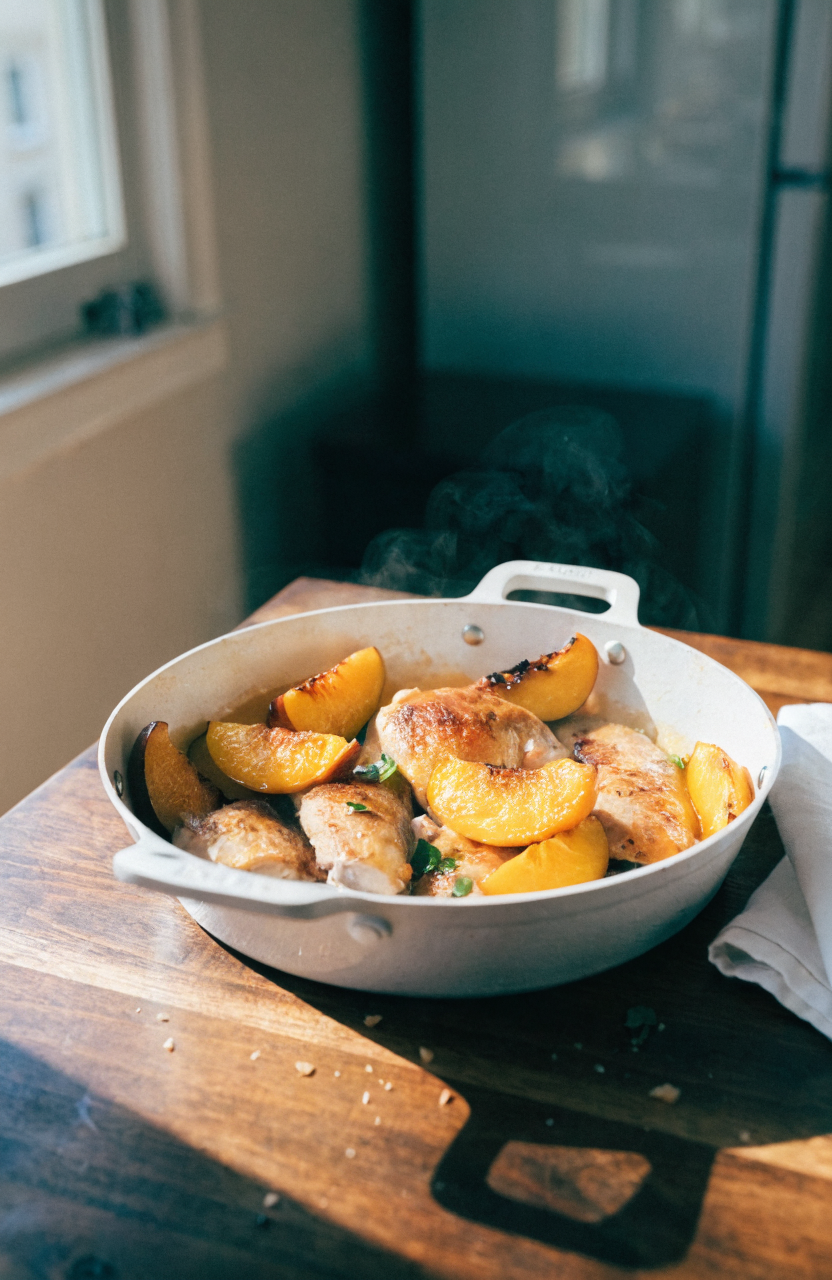
I was racing the clock on a weeknight when I first made chicken with peaches; the house smelled like browned garlic and warm fruit in under 30 minutes. The first time I tried this idea I added the peaches too early and they turned to mush — the sauce was thin and the chicken overcooked. The version here keeps the peaches bright, the chicken juicy, and produces a simple pan sauce you can spoon over rice or greens.
Why this chicken with peaches works
The key technique is searing the chicken quickly on high heat, then finishing it in the same pan while the peaches are added near the end. Searing creates fond — those browned bits on the bottom of the pan — which, when deglazed with a splash of chicken broth and a touch of mustard, turns into a glossy, slightly tangy sauce. The ratio I used in testing is one pound of boneless chicken to about 2 medium peaches for four servings; that keeps fruit pieces large enough to hold texture but few enough not to water down the sauce. During testing I realized adding the peaches in the last 6–8 minutes keeps them vibrant and prevents the sauce from separating. This sequence solves the two most common problems: dry chicken and soggy, flavorless fruit.
Key takeaways
- Sear chicken first to lock in juices and build flavor.
- Add peaches late so they soften but keep shape and sweetness.
- Deglaze the pan with broth and mustard for a quick, stable sauce.
Ingredients you’ll need and what to substitute
You’ll use everyday grocery ingredients: boneless chicken, ripe peaches, aromatics, a little Dijon mustard, and low-sodium chicken broth. Use bone-in chicken with a slightly longer cook time and remove the skin before serving if you prefer leaner meat. If fresh peaches aren’t in season, use high-quality jarred peaches packed in juice (drain and reserve 1/4 cup juice to add with the broth) and reduce added sugar by a teaspoon. For a dairy note, stir in 1 tablespoon of butter off heat for a silkier finish — I sometimes do this when I want a richer sauce for dinner company. If you need a vegetarian swap, replace chicken with firm, 1-inch-thick slices of extra-firm tofu, pressed, then seared; adjust timing so the tofu is golden and warmed through.
Equipment
A 12-inch skillet with a tight-fitting lid is ideal because it gives enough surface area to sear without crowding and the lid lets you finish the chicken gently. A heavy-bottomed stainless steel or cast-iron skillet works best for browning; a nonstick pan can work but won’t produce as much fond. Have a chef’s knife and a cutting board ready, plus tongs and a wooden spoon for deglazing. If you only have a smaller pan, work in two batches to avoid steaming the chicken.
How to make chicken with peaches
Prep
Pat the chicken dry with paper towels — dryness is crucial for a good sear. If you have time, pound the thicker parts to an even 3/4-inch thickness to promote even cooking. Season with salt and pepper and lightly dust both sides with 1 teaspoon of all-purpose flour; the flour helps the surface brown and gives the sauce slight body when deglazed. Slice peaches into 8 wedges each and mince the garlic and a shallot (or half a small onion) for a sweeter, subtler base.
Sear and build flavor
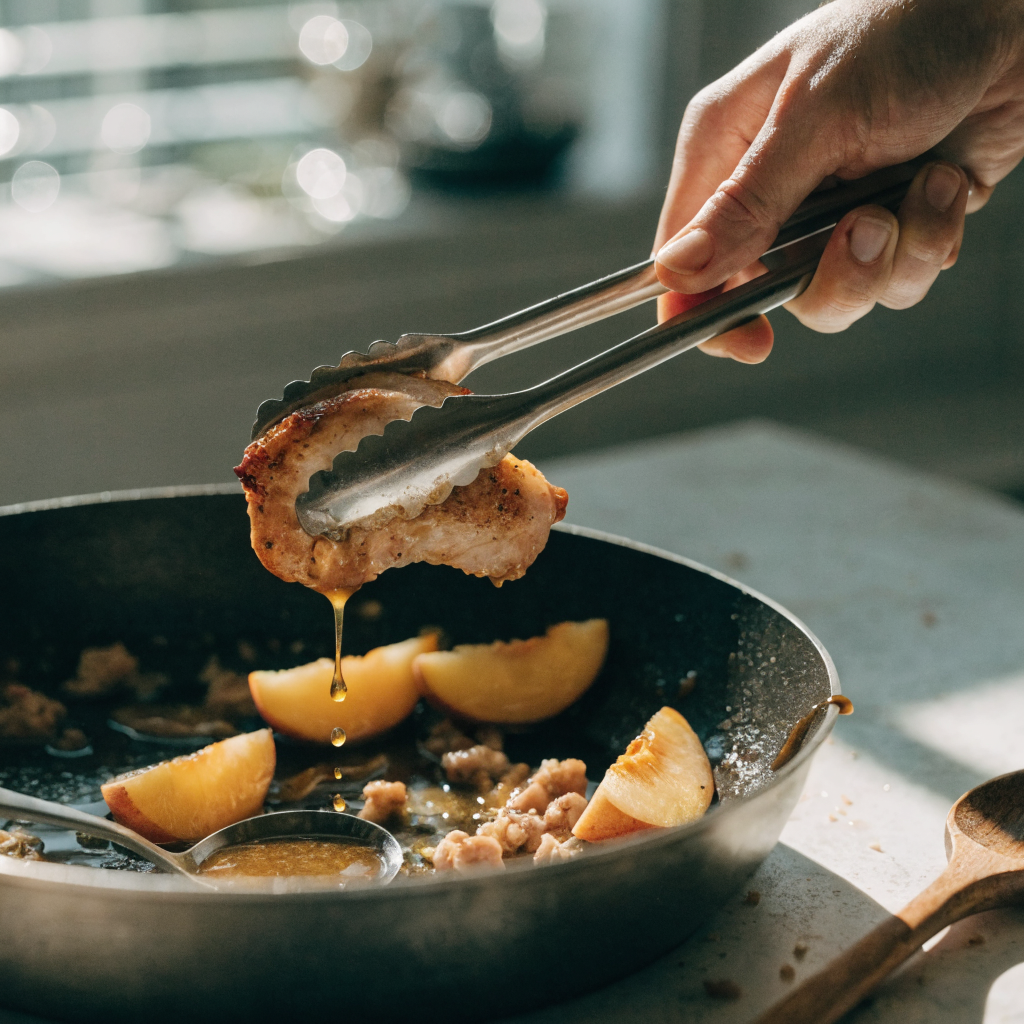
Heat 1 tablespoon of neutral oil over medium-high heat until shimmering. Add the chicken in a single layer without crowding; you may need to cook in two batches. Sear until deeply golden, about 3–4 minutes per side, flipping only once. Transfer the chicken to a plate. Use tongs to scrape any large brown bits from the pan while it’s still hot — that fond is flavor you want to keep.
Finish with peaches and sauce
Lower the heat to medium and add the shallot; cook 1 minute until translucent, then add garlic and cook 20–30 seconds until fragrant. Pour in 1/2 cup low-sodium chicken broth to deglaze, scraping the pan. Stir in 1 teaspoon Dijon mustard and 1 teaspoon honey; bring to a gentle simmer. Nestle the chicken back into the pan, partially cover, and simmer 6 minutes. Add the peach wedges around the chicken and simmer uncovered for another 4–6 minutes until the chicken reaches 165°F in the thickest part and the peaches are warmed but still hold shape. Taste the sauce and add salt, pepper, or 1/2 teaspoon lemon juice if it needs brightness.
Extra practical tips for a reliable result
Small technique changes make a big difference with chicken with peaches. If your skillet seems crowded when you add the peach wedges, remove just one or two pieces of cooked chicken to a warm plate while the sauce reduces; then return them for the final minute so they stay glossy. If you prefer a slightly thicker sauce without cornstarch, lift the chicken out and simmer the sauce a minute or two until it coats the back of a spoon. When using jarred peaches, reserve the packing liquid and add it with the broth for extra peach flavor, then taste and reduce any added sugar. For an even glaze, baste the chicken once with the spoon during the last minute and let it rest for 5 minutes before slicing.
Things I learned the hard way
- Don’t add peaches at the start — they disintegrate and water the sauce. Add them in the last 4–8 minutes.
- Pat chicken completely dry. Moisture equals steaming, not browning.
- If the pan sauce seems thin, remove the chicken and simmer the sauce for 1–2 minutes to reduce; a small slurry of 1 teaspoon cornstarch mixed with 1 tablespoon water can be stirred in off heat for thicker sauce.
- Use medium-high heat for searing but reduce to medium for simmering so the sauce doesn’t separate or burn.
- One failed first attempt had me crowding the pan and steaming halves; the fix was batch cooking and keeping the finished pieces warm in a 200°F oven while finishing the rest.
Variations to try
Grilled finish: After searing, transfer chicken and peach halves to a preheated grill for 2–3 minutes per side to add char; then return to the pan and finish with the pan sauce. Herb-forward: Stir in 2 tablespoons chopped fresh basil or tarragon at the end for summer herbs that pair with peach sweetness; add them off heat to preserve aroma. Spicy-sweet: Add 1/4 teaspoon crushed red pepper flakes when cooking shallot and garlic for subtle heat; balance with an extra 1/2 teaspoon honey if needed. Citrus kick: Substitute 1/2 teaspoon orange zest and 1 tablespoon orange juice for part of the broth for a brighter, fruit-forward sauce; reduce salt slightly. For a pantry-friendly twist, add a tablespoon of Dijon and a splash of apple cider vinegar when using jarred peaches to lift the flavor.
Storage, freezing, and reheating
Cool leftovers within two hours and store in an airtight container in the refrigerator for up to 3 days. The peach texture softens after refrigeration; reheat gently in a skillet over low heat with a splash of broth to loosen the sauce, 5–7 minutes, covered, until heated through. Freezing is not ideal because peaches lose texture; if you must freeze, transfer only the cooked chicken (without peaches) to a freezer-safe container for up to 2 months and add fresh or thawed peaches when reheating. For best results, reheat slices in a 325°F oven, covered, for 10–15 minutes with a spoonful of reserved sauce or broth to keep meat moist. If the sauce tightens when chilled, whisk in a tablespoon of warm broth as you reheat to bring it back to a spoonable consistency.
What to serve with chicken with peaches
This one-pan meal pairs well with fluffy white rice or farro to soak up the sauce, a simple arugula salad tossed with lemon and olive oil for a peppery contrast, or buttered new potatoes for a heartier family plate. For a lighter weeknight side, serve with steamed green beans or roasted asparagus tossed with lemon zest. When plating, spoon extra pan sauce over both chicken and starch so every bite has a balance of sweet and savory.

30-Minute One-Pan Chicken with Peaches
Ingredients
Equipment
Method
- Pat chicken dry and, if needed, pound to an even 3/4-inch thickness; season with salt and pepper and lightly dust both sides with 1 teaspoon flour.
- Heat a 12-inch skillet over medium-high heat and add oil; when shimmering, sear chicken 3–4 minutes per side until deeply golden, working in batches if necessary, then transfer to a plate.
- Reduce heat to medium, add shallot to the pan and cook 1 minute until translucent, add garlic and cook 20–30 seconds; pour in 1/2 cup chicken broth and scrape browned bits, then stir in Dijon and honey and bring to a gentle simmer.
- Nestle chicken into the pan, cover partially, and simmer 6 minutes; add peach wedges around the chicken and simmer uncovered 4–6 more minutes until chicken reaches 165°F and peaches are warmed but still hold shape.
- Remove from heat, taste sauce and add lemon juice, butter, or herbs if desired, and serve over rice or farro.
Notes
Frequently asked questions
Can I use frozen peaches? Yes, but thaw and drain them thoroughly and add toward the end of cooking; they’ll be softer and the sauce may be slightly more watery, so simmer a bit longer to reduce the liquid.
Can I use bone-in chicken? You can; increase the simmering time to 12–14 minutes after searing and check that the thickest part reaches 165°F. Remove bones before serving if you prefer.
How do I keep the sauce from separating? Avoid boiling the sauce hard and finish over medium or medium-low heat; a brief simmer is enough. If separation begins, reduce heat and whisk in 1 teaspoon cold butter off heat to bind.
Is this safe for kids? Yes; ensure chicken reaches 165°F. For picky eaters, serve peaches on the side.
Can I double the recipe? You can, but sear the chicken in batches to avoid crowding the pan; keep cooked pieces warm in a 200°F oven while finishing the last batch.
Closing
Chicken with peaches gives you a bright, family-friendly dinner in about 30 minutes when you sear the meat, add the fruit late, and finish with a quick pan sauce. The method keeps the chicken moist and the peaches glossy, so the finished plate is both simple and a little special — perfect for weeknights when you want something quick that still feels like a treat. Serve with rice or a green salad and enjoy the balance of savory, sweet, and tangy flavors.




Leave a Reply