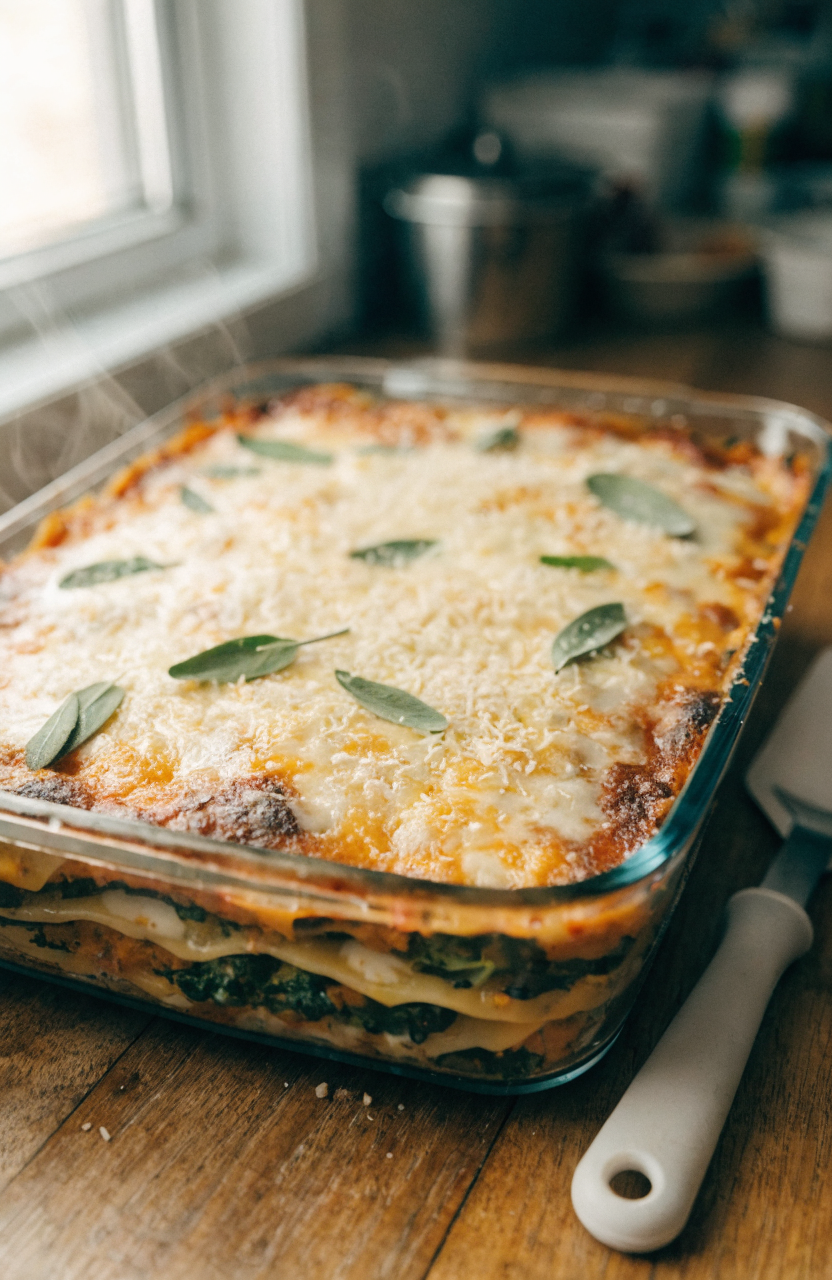
The first time I made pumpkin spinach lasagna I assumed the pumpkin puree would behave like a sauce — big mistake. After one soggy middle and undercooked noodles, I rebuilt the recipe around a thicker pumpkin-ricotta filling and pre-wilted, well-drained spinach. This pumpkin spinach lasagna now bakes evenly, slices cleanly, and tastes like a cozy weeknight dinner the whole family will accept.
Why this pumpkin spinach lasagna works
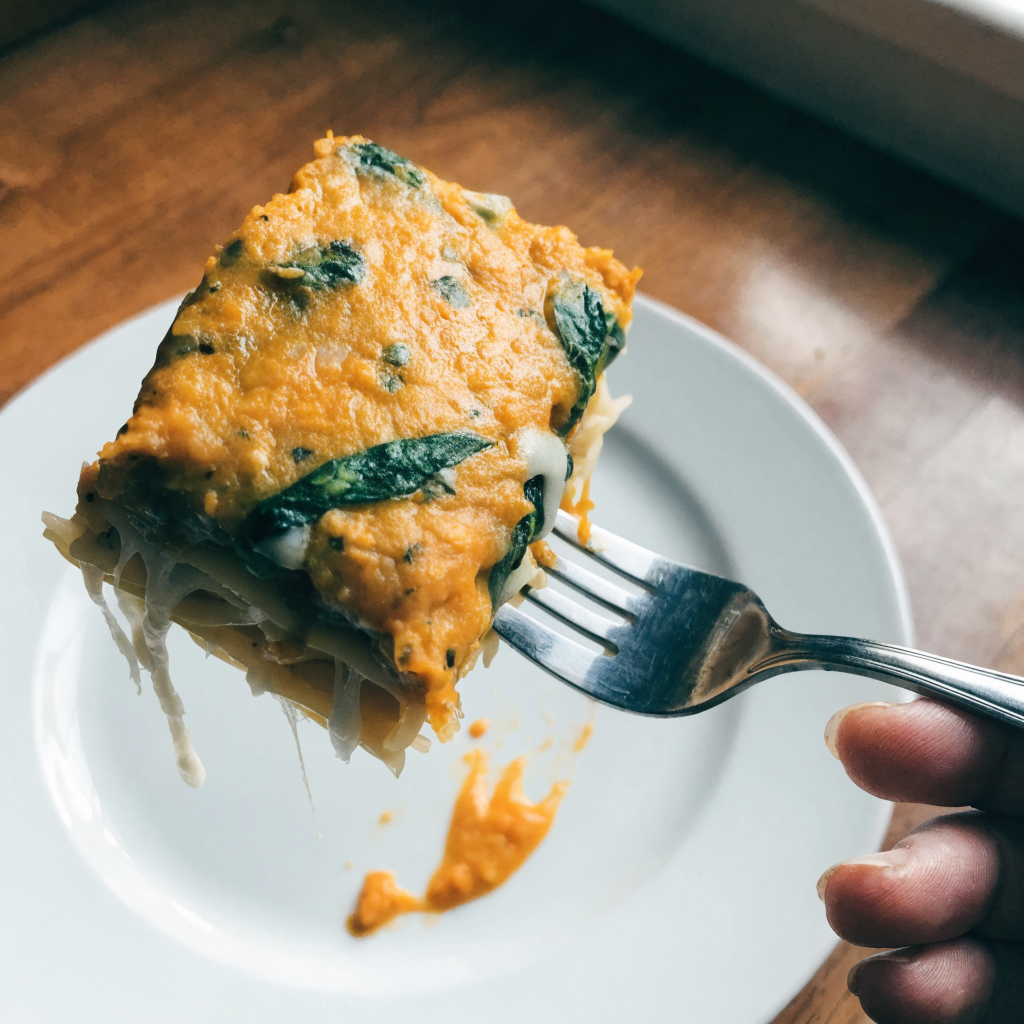
Here’s the thing: pumpkin is naturally watery compared with tomato sauce, and spinach holds a lot of moisture. What made the difference for me was concentrating flavors and controlling moisture before assembly. I combine pumpkin puree with ricotta and a little cornstarch to create a stable, creamy filling that doesn’t weep during baking. I also salt and gently squeeze the spinach after wilting so it releases liquid before it hits the pan. Those two tweaks prevent a soggy lasagna and give predictable bake times so busy families can plan dinner confidently.
During testing I found a 9×13-inch pan and three noodle layers give the best balance of filling-to-pasta ratio for 8 servings. I prefer no-boil lasagna noodles to save time; they hydrate from the filling and the thin layer of sauce. If you use standard noodles, a quick parboil for 4 minutes prevents a gummy center. The final bake at 375°F for 40–45 minutes produces a bubbling, lightly browned top while keeping the interior creamy.
Key takeaways
- Thicken pumpkin filling with ricotta and cornstarch to avoid watery lasagna.
- Wilt and squeeze spinach so excess liquid doesn’t dilute the sauce.
- Use a 9×13-inch pan and three noodle layers for even baking and clean slices.
Ingredients you’ll need and what to substitute
This pumpkin spinach lasagna uses pantry-friendly items with a few easy swaps. Whole-milk ricotta gives creaminess and helps bind the pumpkin; part-skim ricotta works if you prefer less fat, but the texture will be slightly firmer. I use canned pure pumpkin puree (not pumpkin pie mix) for steady flavor year-round. If you prefer fresh, roast and purée about 2 pounds of sugar pumpkin and strain briefly to match the canned consistency.
Parmesan adds a salty tang; grated Pecorino Romano can replace it for a sharper finish. If you need a dairy-free version, swap ricotta for a drained, firm tofu mixture blended with nutritional yeast and a little lemon juice, and use a plant-based shredded cheese for the topping — note that timing and texture will change slightly. For the greens, fresh baby spinach is easiest; frozen chopped spinach can work if fully thawed and squeezed dry. Do not skip squeezing: even frozen spinach can add excess water.
Equipment
- 9×13-inch baking dish (essential for even layering)
- 12-inch skillet for wilting spinach and sautéeing aromatics
- Mixing bowl and rubber spatula
- Box grater or microplane for fresh Parmesan
How to make pumpkin spinach lasagna
Prepare the filling and vegetables
Start by preheating the oven to 375°F. In a large skillet over medium heat, warm 1 tablespoon olive oil and add 1 small diced onion and 2 minced garlic cloves; sauté until softened, about 5 minutes. Add 10 ounces of fresh baby spinach in batches, cooking until just wilted and bright green; remove to a colander, sprinkle with a pinch of salt, and press or squeeze until most liquid is out. Let the spinach cool before chopping roughly.
In a large bowl combine 15 ounces ricotta, 1 1/2 cups canned pumpkin puree, 1 large egg, 1/4 cup grated Parmesan, 1 tablespoon chopped fresh sage (or 1 teaspoon dried), 1 teaspoon kosher salt, 1/2 teaspoon black pepper, and 1 tablespoon cornstarch. The cornstarch thickens the filling and prevents the pumpkin from separating while baking. Fold in the chopped, well-drained spinach; taste and adjust salt if needed.
Assemble the lasagna
Lightly oil the bottom of a 9×13-inch baking dish. Spread a thin layer (about 3/4 cup) of marinara or your favorite tomato sauce across the bottom to prevent sticking. Lay three no-boil lasagna noodles in a single layer — they may overlap slightly. Spoon and spread about one-third of the pumpkin-ricotta mixture over the noodles, then scatter about 1 cup shredded mozzarella. Spoon another 3/4 cup sauce across the top to ensure noodles hydrate evenly. Repeat with another noodle layer, filling, and cheese, finishing with a final noodle layer, the remaining sauce, and a generous 1 to 1 1/2 cups shredded mozzarella plus 2 tablespoons Parmesan on top for browning.
If you used traditional boiled noodles, assemble the same way but be sure noodles are cooled slightly so they don’t tear when layered. Cover the pan loosely with aluminum foil (tent the foil so it doesn’t touch the cheese) — this keeps steam in for even cooking without over-browning early.
Bake and finish
Bake covered for 30 minutes at 375°F, then remove the foil and bake an additional 10–15 minutes until the cheese is bubbly and lightly golden. Let the lasagna rest for at least 15 minutes before cutting — this step helps the filling set so you get clean slices. For extra color, broil for 1–2 minutes at the end, watching carefully so the top doesn’t burn.
Things I learned the hard way
- Don’t add raw spinach straight into the filling. Wilt and squeeze it first to avoid watery layers.
- A liquid pumpkin filling will make the noodles gummy; a tablespoon of cornstarch keeps the filling stable.
- Skipping the rest period means a collapsed lasagna and messy servings — wait 15 minutes before slicing.
- Using a thin layer of sauce under the first noodle prevents sticking without watering the bottom.
- If the top is browning too quickly, keep the foil tented until the last 10–15 minutes.
- First attempt mistake: I used too much canned pumpkin and no binder; the center stayed loose. Adding ricotta and cornstarch fixed the texture on later attempts.
Variations to try
- Roasted Butternut Swap: Replace canned pumpkin with equal parts roasted and mashed butternut squash; roast until caramelized for deeper flavor and reduce cornstarch to 2 teaspoons because roasted squash is drier.
- Mushroom Boost: Sauté 8 ounces sliced cremini mushrooms with the onion and garlic for an earthy version; drain any released liquid before adding to the filling.
- Herb-Forward: Add 1/2 cup chopped fresh basil and omit sage; increase oven time by 5 minutes if the filling seems cooler when assembled.
- Gluten-Free: Use gluten-free lasagna noodles and check package hydration guidance; you may need an extra 5-8 minutes covered to fully cook the noodles.
Storage, freezing, and reheating
Refrigerate leftover lasagna in an airtight container for up to 4 days. To reheat, place a portion in an oven-safe dish, cover with foil, and bake at 350°F for 20–25 minutes until heated through, or microwave on medium power for 2–3 minutes, checking temperature. This lasagna freezes well: cool completely, wrap tightly with plastic wrap and foil, or freeze in an airtight container for up to 3 months. Thaw overnight in the refrigerator and reheat covered at 350°F for 30–40 minutes until bubbly, removing foil for the last 10 minutes to refresh the top.
What to serve with pumpkin spinach lasagna
Keep sides simple for a busy family dinner. A crisp green salad with lemon vinaigrette, garlicky roasted broccoli, or a crusty whole-grain loaf are all good companions. For picky eaters, serve with a small bowl of extra marinara on the side for dipping.

Pumpkin Spinach Lasagna with Ricotta
Ingredients
Equipment
Method
- Heat the olive oil in a 12-inch skillet over medium heat; sauté the diced onion until translucent, about 5 minutes, then add the garlic and cook 30 seconds until fragrant.
- Cover loosely with foil (tenting so it doesn't touch the cheese) and bake covered for 30 minutes at 375°F.
- Remove the foil and bake an additional 10–15 minutes until cheese is bubbly and lightly golden; optionally broil 1–2 minutes at the end, watching carefully.
- Let the lasagna rest uncovered for at least 15 minutes before cutting and serving.
Notes
Frequently asked questions
Can I use frozen spinach? Yes—thaw completely and squeeze out all excess water before adding to the filling; frozen spinach often releases more liquid than fresh.
Do I need to precook lasagna noodles? No, if you use no-boil noodles they hydrate during baking; if using standard dry noodles, parboil for 3–4 minutes to avoid a gummy center.
How do I prevent watery lasagna? Thicken the pumpkin filling with ricotta and a small amount of cornstarch, and squeeze wilted spinach dry before assembly; also avoid overloading with extra sauce between layers.
Can I make this ahead? Yes—assemble the lasagna, cover tightly, and refrigerate up to 24 hours before baking; add 5-10 minutes to the covered bake time if going straight from the fridge.
Is this recipe vegetarian? Yes, the dish is vegetarian as written; you can add cooked Italian-style plant-based sausage if desired without changing core timing much.
How long does it last in the freezer? Wrapped well, this lasagna will keep for up to 3 months; thaw overnight before reheating for best texture.
Closing
After a few rounds of tweaking, this pumpkin spinach lasagna became my go-to vegetarian weeknight casserole because it bakes reliably, feeds a family, and stores well for leftovers — I like that it tastes comforting without being heavy, and the 15-minute rest gives predictable slices for serving. Serve warm with a simple salad or roasted vegetables and keep any extra marinara on hand for dipping; the lasagna reheats well and makes a satisfying make-ahead dinner for busy evenings.




Leave a Reply