When I first grilled peaches for a backyard get-together I learned the hard way that sweet fruit can collapse or stick to the grates if you don’t time things right. Grilled peaches are a fast, crowd-pleasing treat that highlights summer stone fruit, and this grilled peaches recipe gives clear cues and dependable timing so busy families can serve consistent results every time.
Why this grilled peaches works
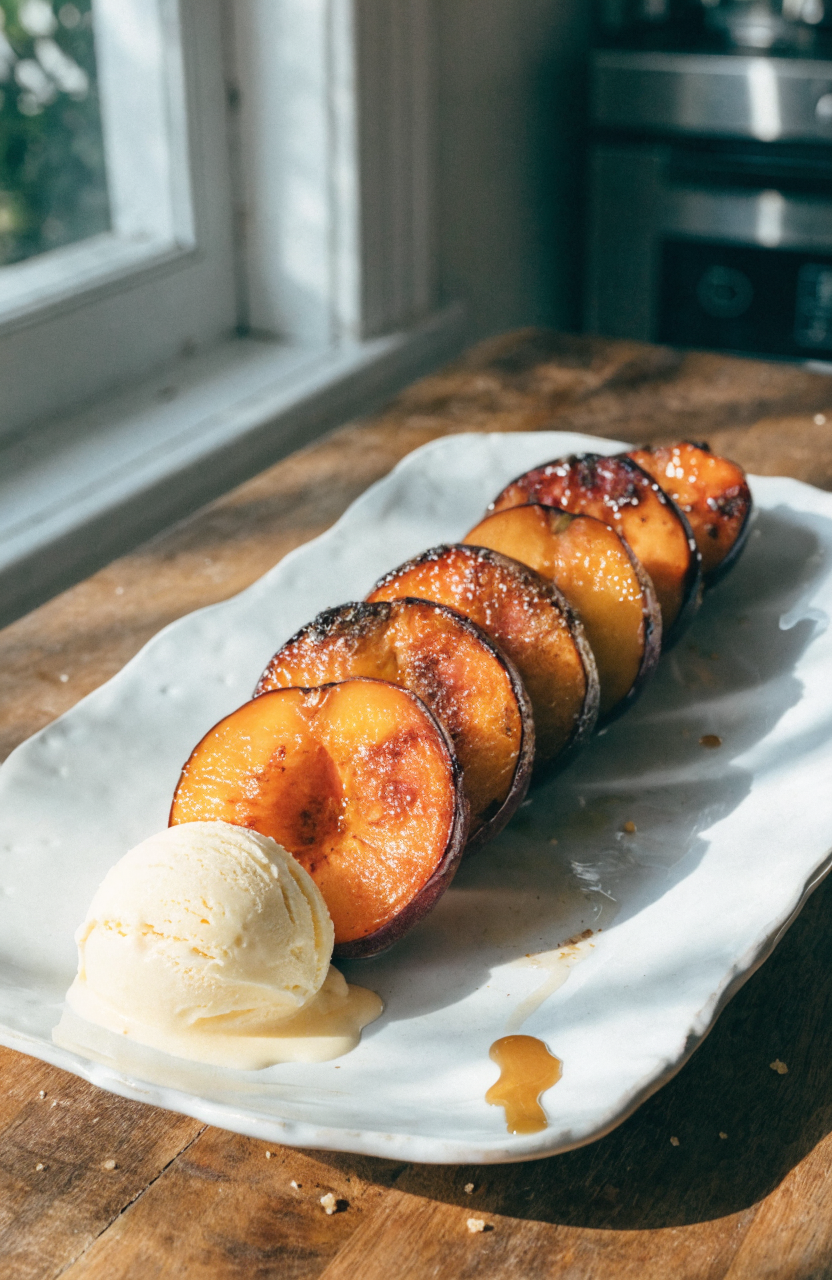
The key technique here is quick, hot grilling with a light coating of oil and a brief post-grill rest. Peaches caramelize best at high heat, which creates a sweet, slightly smoky crust without turning the flesh mushy. During testing I initially grilled at medium heat for longer and ended up with soggy halves that stuck to the grates. What changed was boosting the grill to medium-high (about 425–450°F), brushing the cut sides with a little neutral oil, and using a short 2–3 minute sear per side. I also learned that chilling whole peaches for 10–15 minutes before cutting helps them hold shape and reduces juice loss when hitting the grill. That combination gives even caramelization, a bit of char, and a firm-but-tender interior that’s easy to serve to kids and adults alike.
Key takeaways
- High, direct heat (425–450°F) sears the cut peach surface quickly without overcooking the interior.
- Brushing with a little oil and using a brown-sugar cinnamon rub prevents sticking and boosts caramelization.
- A brief chill before slicing and a short rest after grilling keep texture consistent for serving.
Ingredients you’ll need and what to substitute
This recipe keeps the ingredient list short and pantry-friendly. Ripe but slightly firm peaches work best because overly soft fruit can fall apart on the grates. I use light brown sugar and ground cinnamon for a warm, caramelized finish; you can swap with granulated sugar plus a teaspoon of molasses if that’s what you have. A touch of melted butter or olive oil helps the sugar adhere and encourages browning—use melted butter for a richer flavor or neutral oil (canola, vegetable) if you prefer a lighter finish.
Substitutions and notes:
- If peaches are very sweet, reduce the brown sugar to 1 tablespoon per peach half to avoid overly cloying results.
- For a dairy-free option, substitute melted coconut oil for the butter; it will add a hint of coconut aroma and can change the caramel color slightly.
- Neat budget swap: use granulated sugar with a small pinch of salt and 1/2 teaspoon molasses to mimic light brown sugar.
- Measure the sugar carefully—too much will liquefy quickly and cause flare-ups on a gas grill; the small, even layer is enough.
Equipment
Essential tools keep this simple and consistent.
- Gas or charcoal grill capable of medium-high heat (425–450°F); a grill pan or cast-iron grill pan on the stovetop works as an alternative.
- Small pastry brush or silicone brush for oil and butter application.
- Sharp chef’s knife and cutting board for halving and pitting peaches; a spoon works to remove the pit.
- Optional: instant-read thermometer (useful for food safety if serving with grilled meat on the same grill).
How to make grilled peaches
Prep and rub
Start by chilling whole peaches in the refrigerator for 10–15 minutes; this firms the fruit and reduces juice loss when you cut them. While the fruit chills, preheat the grill to medium-high, aiming for 425–450°F. In a small bowl mix 3 tablespoons light brown sugar, 1 teaspoon ground cinnamon, and a pinch of salt. Melt 2 tablespoons unsalted butter (or warm 2 tablespoons neutral oil) and set aside.
Cut, oil, and sugar
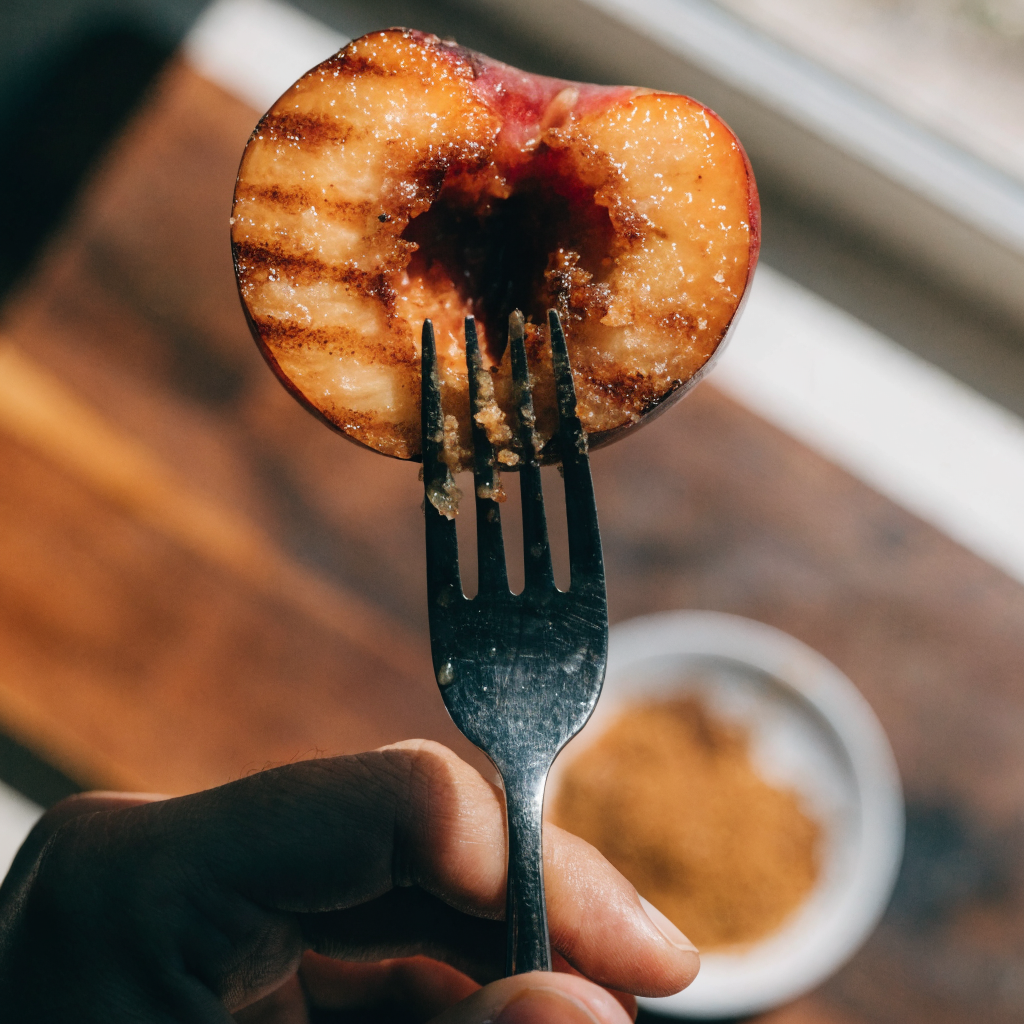
Halve the peaches and twist to separate; remove the pits with a spoon. Using the pastry brush, lightly coat the cut sides with the melted butter or oil—just enough to moisten, not drip. Sprinkle the brown sugar-cinnamon mixture evenly over the cut sides, pressing gently so it adheres. Leave the skin side bare; a little char on the skin adds flavor and texture.
Grill
Place peaches cut side down on the hottest part of the grates and sear for 2 to 3 minutes without moving them—look for golden-brown to deep-amber caramelization. Flip and grill skin side down for 1 to 2 minutes to warm through and add light char to the skin. If you’re using a cast-iron pan on the stovetop, heat the pan until it smokes faintly, then sear the peaches cut-side down for the same timing.
Rest and serve
Transfer peaches to a serving platter and let them rest for 3 to 5 minutes; this lets juices redistribute and makes them easier to spoon or slice. Serve warm with a scoop of vanilla ice cream, a dollop of Greek yogurt, or alongside grilled chicken for a sweet-savory pairing. Watch for flare-ups—if sugar drips and flames flare, move the peaches briefly to a cooler zone until flames subside.
Things I learned the hard way
- Don’t skip the chill step: placing very warm or room-temperature, overly soft peaches on the grill often leads to collapsed halves. A short chill firms the flesh and reduces juice loss.
- Brush, don’t pour: brushing butter or oil on the cut surfaces gives control and avoids excess fat that causes flare-ups.
- Keep it short: extended grilling at medium heat makes the interior mushy; high heat with short sears keeps structure and caramel.
- Avoid heavy sugar piles: too much brown sugar liquefies and can drip through grates, causing smoke and sticky messes. Use a light, even layer.
- First-attempt mistake: I tried glazing immediately after flipping and the sugar burned; fixing that meant glazing just before removing from the grill so sugar melts without scorching.
Variations to try
- Maple-Cinnamon: Swap half the brown sugar for pure maple syrup, brush sparingly, and reduce direct heat time by 30 seconds per side.
- Honey-Lime: Replace sugar with 2 tablespoons honey mixed with 1 teaspoon lime zest; grill the same time and finish with a tiny squeeze of lime juice for brightness.
- Savory Herb: Omit sugar and brush with olive oil, sprinkle a pinch of kosher salt and chopped fresh thyme before grilling; serve with grilled chicken or other protein, or on a salad.
- Spiced Butter: Stir a pinch of ground cardamom into the melted butter before brushing to add floral warmth; timing remains the same.
Storage, freezing, and reheating
Grilled peaches are best served the day they’re made. Refrigerate leftovers in an airtight container for up to 3 days; the texture will soften and be best used warmed or folded into yogurt or oatmeal. To reheat, place peaches in a single layer on a rimmed baking sheet and warm at 325°F for 6–10 minutes until heated through. You can also reheat briefly in a skillet over medium-low heat for 2–3 minutes. Freezing is not recommended for maintaining texture—the flesh becomes too watery when thawed. For best quality, plan to grill just before serving and use leftovers promptly for breakfasts or desserts the same week.
What to serve with grilled peaches
Pairings that fit convenient family meals include:
- Vanilla ice cream or frozen yogurt for an easy dessert.
- Thick Greek yogurt with a drizzle of honey for a breakfast or snack option.
- Grilled chicken or turkey breast as a sweet complement to a weeknight protein.
- Simple green salad with arugula and toasted nuts for a light side.
- Warm shortcakes or pound cake slices for a relaxed gathering dessert.
Simple Grilled Peaches with Cinnamon and Brown Sugar
Ingredients
Equipment
Method
- Chill whole peaches in the refrigerator for 10–15 minutes to firm the flesh, then preheat the grill to medium-high, aiming for 425–450°F.
- In a small bowl combine the brown sugar, ground cinnamon, and salt. Melt the butter or warm the oil and set aside.
- Halve the peaches and remove the pits with a spoon. Brush the cut sides lightly with melted butter or oil, then sprinkle the sugar-cinnamon mixture evenly over the cut surfaces and press gently to adhere.
- Place peaches cut side down on the hottest part of the grates and sear for 2–3 minutes without moving them, until deep golden-brown. Flip and grill skin side down for 1–2 minutes until warmed through and lightly charred.
- Transfer to a platter and rest 3–5 minutes to let juices settle. Serve warm with ice cream, yogurt, or alongside grilled protein.
Notes
Frequently asked questions
Q: Can I use canned or frozen peaches?
A: Fresh, slightly firm peaches give the best texture; canned or frozen peaches are too soft and watery for grilling and will fall apart.
Q: How do I choose ripe peaches that will hold up on the grill?
A: Look for peaches that yield slightly to gentle pressure but aren’t squishy. A slight firmness helps them keep shape when grilled.
Q: Can I make these on a gas grill and a charcoal grill?
A: Yes—both work. Aim for the same medium-high surface temperature (425–450°F). On charcoal, use direct heat over a hot bed of coals for the same short sear.
Q: Do I need to oil the grill grates?
A: Brushing the peach cut sides with oil is usually enough; if your grates are older or prone to sticking, brush a little oil on the grates right before placing the fruit.
Q: Are grilled peaches safe to serve to children?
A: Yes—just ensure the fruit is cooled to a warm temperature before serving to avoid burns and cut into child-friendly sizes.
Q: What should I do if my brown sugar burns on the grill?
A: If sugar begins to char too quickly, move peaches to a cooler section of the grill and reduce direct heat. In future batches use slightly less sugar or shorter sear times.
Q: Can I prep peaches ahead for a party?
A: You can mix the sugar-cinnamon rub and chill whole peaches for up to a day, but apply the rub and grill just before serving for best texture. Pre-grilled peaches can be warmed briefly but won’t have the same fresh sear.
Closing
These simple steps—brief chilling, a light brush of fat, and short, hot sears—make grilled peaches reliably caramelized without falling apart. Grilled peaches adapt well to quick weeknight desserts, casual backyard gatherings, and simple plated meals where a touch of sweet fruit brightens a savory main. Keep the sugar light, watch direct heat, and enjoy the easy reward of warm, caramelized fruit that complements ice cream, yogurt, or grilled proteins.

Leave a Reply